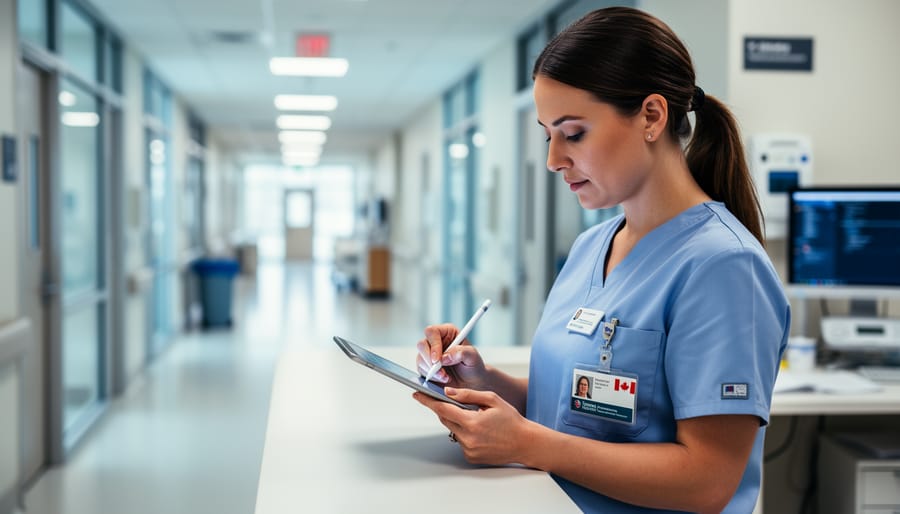
Sarah Chen almost lost her registration over a documentation gap she didn’t think mattered. A patient fell during her shift at Toronto General, and while Sarah provided excellent care and followed every protocol, her chart notes were sparse. Six months later, when the family filed a complaint, Sarah couldn’t prove what she’d actually done. The College of Nurses investigated, and Sarah spent sleepless nights wondering if her 15-year career would end because of incomplete paperwork.
Documentation isn’t just administrative busy work. It’s the legal record that protects your practice, ensures patient safety, and creates continuity of care across shifts and settings. Every note you write becomes a permanent testament to your clinical judgment, your interventions, and your patient’s response to treatment.
In Canadian healthcare, where nurses face increasing scrutiny and legal challenges, proper documentation serves as your professional shield. Courts consider what wasn’t documented as care that wasn’t provided. Insurance companies deny claims based on missing records. Quality improvement initiatives fail without accurate data. Your documentation tells the complete story of patient care when memories fade and details blur.
The reality is stark: good documentation can validate your excellent nursing practice, while poor documentation can destroy it. This matters whether you’re a new graduate navigating your first charting requirements or a veteran nurse managing complex cases across multiple patients. The standards have evolved significantly in 2026, with electronic health records and increased accountability making documentation skills more critical than ever.
Understanding why documentation matters transforms it from a tedious task into a professional priority. The difference between viewing charting as compliance versus protection changes how you approach every shift.
The Legal Shield: How Your Notes Protect You in Court
Your nursing notes become your most credible witness when questions arise about the care you provided. In Canadian courtrooms and regulatory hearings, documentation often carries more weight than memory, especially when months or years have passed between an incident and its review. Provincial nursing colleges across Canada use documentation as the primary evidence when investigating complaints or determining if practice standards were met.
The legal principle “if it wasn’t documented, it wasn’t done” holds significant power in malpractice cases. Courts and regulatory bodies cannot assume an assessment was performed or a medication was given if the record lacks evidence. A British Columbia nurse faced professional discipline when she could not prove she had monitored a post-operative patient every two hours as per protocol because she had delayed charting until the end of her shift. Her employer’s policy required timely documentation, and the gap in recorded vital signs became the central issue, even though she insisted the assessments had occurred.
Documentation standards vary slightly by province, but all Canadian nursing regulatory bodies require accurate, timely, and objective recording of patient care. The College of Nurses of Ontario, for example, specifies that nurses must document sufficient information to support continuity of care and demonstrate professional accountability. Saskatchewan and Alberta nursing colleges have similar requirements emphasizing legibility, chronological order, and the inclusion of patient responses to interventions.
In malpractice litigation, your nursing notes establish what you observed, what actions you took, and when you escalated concerns. An Ontario emergency department nurse avoided liability when her thorough documentation showed she had reported concerning symptoms to the attending physician three times before a patient’s condition deteriorated. Her notes included specific times, the physician’s name, and exact details of what she communicated. Without that paper trail, the case would have devolved into conflicting memories.
Disciplinary proceedings often hinge on documentation quality rather than actual competence. A nurse who provides excellent care but documents poorly faces greater professional risk than one who does both well. Regulatory colleges review documentation to assess clinical judgment, critical thinking, and adherence to standards. Incomplete or inaccurate records suggest potential gaps in care, even when none existed, making thorough documentation your strongest professional protection.
The Clinical Foundation: Documentation That Saves Lives
Building the Complete Patient Story
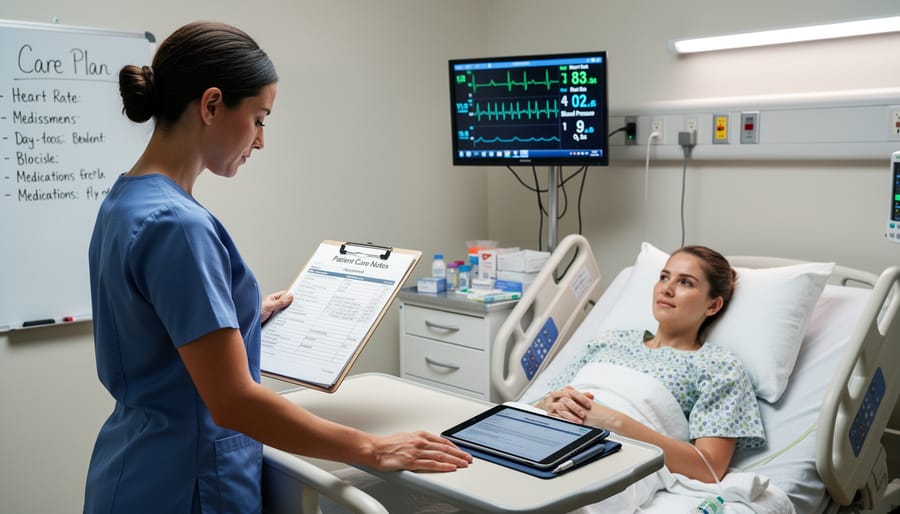
Every nursing shift captures a single frame in a much larger picture. A patient admitted with chest pain receives initial assessments, diagnostic tests, medications, and monitoring. One shift documents their response to nitroglycerin. The next notes improving pain levels but new shortness of breath. Another records vital sign trends and activity tolerance. Separately, these entries provide snapshots. Together, they reveal a patient’s trajectory, whether they’re improving, plateauing, or deteriorating in ways that single observations might miss.
This longitudinal view transforms disconnected data points into a coherent narrative. When a physician reviews three days of nursing notes before rounds, they spot patterns: blood pressure gradually creeping upward despite medication, pain scores rising at consistent intervals, or confusion worsening each evening. A pharmacist checking documentation history identifies that nausea started exactly when a new antibiotic began, not from the patient’s underlying condition. Comprehensive documentation connects these dots across time and across caregivers.
The value extends beyond immediate clinical decisions. During discharge planning, weeks of nursing notes reveal which mobility techniques worked, which education the patient retained, and what family support exists at home. For readmissions, prior documentation provides context that emergency assessments cannot capture, baseline function, previous complications, response patterns to treatments. One nurse’s thorough documentation of a patient’s baseline confusion level prevented another nurse from mistaking delirium for the patient’s normal state weeks later.
Without this continuous thread of documented observations, assessments, and responses, healthcare teams operate with incomplete information, making decisions based on isolated moments rather than the full patient story.
Communication Across Healthcare Teams
When a cardiac patient’s potassium levels started trending downward over three consecutive shifts, it was the detailed nursing documentation that allowed the cardiologist, pharmacist, and dietitian to intervene before a dangerous arrhythmia developed. Each professional accessed the same thorough nursing notes, eliminating gaps in understanding and enabling coordinated action.
Nursing documentation serves as the central communication hub in modern healthcare teams. Physicians reviewing your notes before morning rounds make treatment decisions based on the overnight trends you’ve recorded. Pharmacists cross-reference your administration times and patient responses when flagging potential drug interactions. Physiotherapists check your mobility assessments before designing therapy protocols. Respiratory therapists read your lung sound descriptions to adjust ventilator settings. Without accurate, detailed nursing documentation, these professionals work from incomplete information.
The interdisciplinary care conference depends entirely on documented evidence. When the team discusses discharge planning for a stroke patient, the occupational therapist needs your documented observations about the patient’s ability to manage daily tasks. The social worker references your notes about family dynamics and support systems. The speech therapist reviews your documentation of swallowing difficulties. Your documented findings shape the entire care trajectory.
Time-sensitive situations amplify this importance. When a patient deteriorates rapidly, the responding physician doesn’t have time to interview everyone who cared for that patient across three shifts. They rely on nursing documentation to understand the patient’s baseline, what changed, and when. A nephrologist consulted for acute kidney injury needs your documented intake and output records from the past 48 hours, not verbal approximations.
Electronic health records make this even more critical. Multiple professionals access the same chart simultaneously across different units and sometimes different facilities. Your documentation becomes the authoritative record that prevents contradictory orders and ensures everyone truly works from the same page.
What Makes Documentation Effective in 2026
Effective nursing documentation in 2026 balances technological capabilities with core professional standards. Whether you’re charting on paper in a rural clinic or navigating a sophisticated EHR system in a tertiary care centre, five foundational elements remain constant.
**Accuracy comes first.** Record exactly what you observe, measure, and do. “Patient reports 7/10 sharp pain in right lower quadrant, guarding noted on palpation” beats “patient uncomfortable” every time. Specific vital signs, precise wound measurements, and quoted patient statements create a reliable clinical record. When you document a medication administration, verify the dose, route, and time match what actually occurred. One Vancouver nurse caught a near-miss when she noticed her documentation didn’t align with the MAR, she’d almost charted the intended dose rather than the reduced dose she’d actually given.
**Timeliness matters more than most nurses realize.** Document as close to the event as possible. Waiting until the end of your shift means details fade, and delayed entries raise questions about accuracy during legal reviews. Most Canadian provinces expect documentation within the same shift. If you must make a late entry, label it clearly with the current date and time, then note when the event occurred.
**Objectivity separates professional documentation from opinion.** Describe what you see, hear, and measure without interpretation. “Patient yelling, throwing water pitcher, BP 168/94” provides clearer information than “patient aggressive and non-compliant.” Save clinical judgment for your assessment section, where it belongs, and support it with the objective data you’ve recorded.
**Completeness means capturing the full picture.** Provincial nursing colleges across Canada require documentation of assessments, interventions, patient responses, and teaching provided. Don’t skip the outcome. If you repositioned a patient for pressure relief, note whether the reddened area improved. If you taught insulin administration, document what the patient demonstrated back to you.
**Compliance with standards protects everyone.** Follow your facility’s policies, your provincial college practice standards, and documentation guidelines for your specialty. In Ontario, the CNO requires entries be legible, permanent, and include your signature and designation. British Columbia’s BCCNM emphasizes the same principles apply whether you’re writing or typing. Electronic systems add specific requirements: never share passwords, don’t use copy-forward without reviewing and updating each field, and understand your organization’s policies on error correction.
The strongest documentation answers a simple question: could another nurse reading this note provide safe, informed care?
Common Documentation Pitfalls and How to Avoid Them
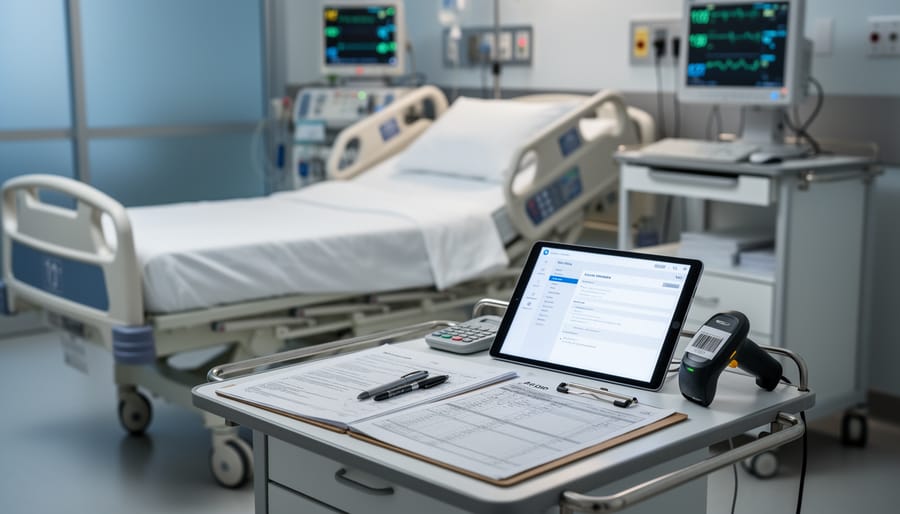
Even experienced nurses fall into documentation traps that can compromise patient safety and professional accountability. Understanding these pitfalls and how to avoid them strengthens the overall importance nursing documentation holds in clinical practice.
Vague language ranks as the most common weakness. Phrases like “patient tolerated procedure well” or “appears comfortable” tell subsequent caregivers almost nothing. Instead, document specific observations: “Patient reports pain 3/10 after dressing change, no grimacing noted, vital signs stable.” The difference between weak and strong documentation often lies in measurable, observable details rather than subjective impressions.
Late entries create credibility issues, especially in legal proceedings. When you cannot document immediately, note the actual time of the observation and clearly mark it as a late entry with the current documentation time. Never backdate entries to make them appear contemporaneous, even under pressure from colleagues or during busy shifts.
Copy-paste errors in electronic health records have led to documented interventions that never occurred and missed changes in patient status. A Manitoba nurse shared how a copied respiratory assessment failed to capture a patient’s declining oxygen saturation because she didn’t update the pasted text. Review every copied section before saving, and customize it to reflect current findings.
To illustrate the difference between ineffective and effective documentation, consider these good nursing notes examples:
| Weak Documentation | Strong Documentation |
|---|---|
| Patient upset about care | Patient states “Nobody listens to me” after physician left room. Patient education provided regarding treatment plan. Patient verbalized understanding and agreed to continue with prescribed regimen. |
| Wound improving | Sacral wound 3cm x 2cm x 0.5cm, decreased from 4cm x 3cm x 1cm on June 12. Minimal serous drainage, no odour, edges pink and approximating. Photo documentation completed. |
| Fall precautions in place | Fall risk score 8/10. Bed in lowest position, call bell within reach, yellow non-slip socks applied, family educated on fall prevention. Patient instructed to call for assistance before mobilizing. |
These strong vs weak notes demonstrate how specificity transforms documentation from checkbox compliance into meaningful clinical communication.
Missing patient education documentation leaves you vulnerable. If a patient develops complications after refusing a recommended intervention, your note must show you provided appropriate teaching and documented their informed refusal. Write exactly what you taught, what materials you provided, and how the patient demonstrated understanding.
Omitting critical context undermines the importance nursing documentation serves. When you administer PRN medication, document not just the dose and time but the assessment that prompted it, patient response within the specified timeframe, and any follow-up required. Complete documentation tells the whole story, protecting both patient and nurse.
Real Stories from Canadian Nurses: When Documentation Made the Difference
Sarah Chen remembers the night shift in her Vancouver emergency department when a patient arrived with chest pain. Her detailed documentation of the patient’s description, “squeezing pressure radiating to the jaw, not relieved by position change”, caught the attention of the incoming day shift physician who had rotated off the case. He returned to review her notes and immediately ordered a cardiac workup that the overnight team had missed. The patient was in the cath lab within two hours. “My words on that chart,” Sarah says, “literally mapped the path to his diagnosis.”
In rural Manitoba, long-term care nurse Marcus Baptiste faced a family complaint alleging their mother had been neglected during a fall. His thorough incident report, completed within the hour, documented the patient’s baseline mobility assessment, the two-person assist protocol he’d followed, the non-skid footwear she was wearing, and his immediate post-fall neurological checks. The documentation showed not neglect but appropriate care delivery. The family later apologized after the facility walked them through Marcus’s notes. “I wasn’t just covering myself,” he reflects. “Those records showed I’d honoured my duty to their mom.”
Community health nurse Priya Sharma in Toronto tracks her diabetic patients’ education sessions with precision. When one patient’s A1C dropped from 9.2 to 6.8 over six months, Priya’s documentation became the template for her clinic’s diabetes management program. Her nursing notes examples showed exactly which teaching methods worked, when reinforcement was needed, and how she’d adapted her approach to the patient’s learning style. “They weren’t just notes,” she explains. “They were a roadmap other nurses could follow to get the same results.”
These nurses didn’t set out to be heroes through paperwork. They simply documented thoroughly, accurately, and consistently. Their stories prove that behind every chart entry is a potential life saved, a career protected, or a practice improved.
Nursing documentation is not paperwork that takes you away from patient care. It is patient care. Every note you write, every assessment you record, every intervention you document becomes part of the protective framework that keeps patients safe and careers intact. The importance of nursing documentation extends beyond hospital policies and college requirements. It is the clinical competency that bridges every shift change, supports every care decision, and stands as evidence of the professional judgment you exercise dozens of times each day.
When you document thoroughly and accurately, you are building the foundation for continuity of care, creating legal protection for yourself and your team, and contributing to the evidence base that drives healthcare forward. Your notes tell the complete patient story that saves lives and prevents errors. This is not administrative burden. This is nursing excellence in action.
Make documentation part of your thriving nurse habits rather than an afterthought. Integrate it into your clinical thinking, not something you rush through at the end of a shift. Your future self, your colleagues, and most importantly, your patients will benefit from the time you invest now.
We want to hear from you. Share your documentation experiences, the moments when your notes made a difference, or the lessons you learned the hard way. Connect with Canadian Frontline Nurses for resources, support, and community as you continue developing this essential professional skill.