

The highest-paying nursing careers in Canada in 2026 include advanced practice roles like Nurse Practitioners, Clinical Nurse Specialists, and Nurse Anesthetists. Pay is shaped by specialization, geographic location, education level, and years of experience. These positions sit at the top of clinical nursing practice, and they bring more than a bigger paycheque: greater autonomy, an expanded scope of practice, and leadership opportunities that shape patient care across the country.
If you’re a student mapping your career or an experienced RN weighing your next move, knowing where nursing careers salaries land is a practical starting point. Our compensation guide shows that salary differences between nursing roles can be substantial, sometimes 40% or more depending on specialization and province.
The numbers give a sense of the spread. Registered nurses in Canada earn a median of $43.27 an hour. The average salary for a Clinical Nurse Manager is $111,886 per year, and the average for an Advanced Practice Registered Nurse is $55.42 per hour. That last figure comes from 13 salaries taken from Indeed job postings over the past 36 months, so treat it as a snapshot rather than a guarantee.
Consider Maria, a registered nurse from Edmonton who spent eight years in medical-surgical nursing before pursuing her Nurse Practitioner certification. The extra education demanded real dedication, but the expanded scope let her diagnose, order tests, and prescribe medications independently. Beyond the financial gain, she found renewed purpose in providing continuity of care in a rural primary care setting where physician shortages had left gaps in access.
Canadian healthcare delivery relies on this full spectrum of nursing expertise. From bedside care to advanced clinical practice, each role serves distinct patient populations and specific needs. Provincial health systems, collective bargaining agreements, and regional demand all shape compensation packages. That’s why location and specialty choice matter so much.
This roundup examines ten distinct nursing roles ranked by earning potential, covering the qualifications required, the responsibilities involved, and the factors that drive pay differences across Canada’s provinces and territories.
How We Ranked These Nursing Roles
We ranked these nursing roles primarily by typical compensation packages across Canada, drawing on general market patterns rather than specific dollar figures. Our methodology weighs base salary positioning, required credentials and education level, scope of practice, and the degree of specialization or advanced training each role demands.
Several factors make direct salary comparisons challenging in Canadian nursing. Provincial pay scales vary significantly, a role commanding strong compensation in Alberta may sit differently relative to other positions in Ontario or British Columbia. Union agreements, employer type (public health authority versus private clinic), years of experience, and additional certifications all shift where individual nurses land within broad salary bands.
We also considered total compensation beyond base pay: shift differentials for nights and weekends, northern or remote allowances, pension contributions, and professional development support. A role ranked lower by base salary alone might offer compelling total packages when these elements combine. This ranking gives you a framework for understanding which nursing paths typically command higher earning potential, while recognizing your actual salary will depend on your unique circumstances and career choices.
1. Nurse Practitioner (NP)
A nurse practitioner in a modern clinic setting represents advanced nursing roles and higher earning potential.
Nurse Practitioners sit at the top of the pay scale in Canadian nursing, and the nurse practitioner salary Canada employers offer reflects the advanced practice authority that comes with the role. NPs diagnose conditions, order and interpret diagnostic tests, prescribe medications, and provide comprehensive patient care. In many communities they act as the primary care provider.
Getting there takes real investment. After earning your RN and building clinical experience, you’ll complete a graduate-level nurse practitioner program and meet CNO NP registration requirements in Ontario or the equivalent provincial standards elsewhere in Canada. That means a master’s degree plus certification in a specialty such as family, pediatrics, or adult care.
The payoff shows up in 2026 compensation data. Nurse practitioners are among the advanced practice roles, alongside Clinical Nurse Specialists and Nurse Anesthetists, that rank as the highest-paying nursing careers in Canada. For context, Indeed postings put the average Advanced Practice Registered Nurse wage at $55.42 per hour, while registered nurses earn a median of $43.27 an hour. Keep in mind that the APRN figure rests on only 13 salaries from job postings over the past 36 months, so treat it as a rough marker rather than a promise. You can compare nurse practitioner pay levels against other nursing roles to see where the gaps are widest.
Where you land depends on specialization, province, education level, and years of experience. Differences between nursing roles can run 40% or more depending on specialization and province, so two NPs with the same title can earn quite different amounts. Employer type matters too. NPs in remote communities often receive enhanced packages that include northern allowances and housing benefits, and hospital-based NPs may be paid differently than colleagues in community health centres or private practice.
The money is only part of the draw. Many NPs describe the autonomy as the real reward: managing your own patient panel, making clinical decisions independently, and shaping care plans from start to finish. In rural areas especially, an NP may be the main healthcare provider for patients who would otherwise travel hours to see a physician. That accountability is exactly what the higher pay recognizes.
2. Clinical Nurse Specialist (CNS)
Clinical Nurse Specialists occupy a unique position in Canadian healthcare, bridging the gap between bedside care and organizational improvement. Unlike nurse practitioners who focus on direct patient care and diagnosis, CNSs serve as expert consultants who work across systems to improve patient outcomes, develop evidence-based protocols, and mentor nursing staff in specialized areas of practice.
CNSs typically concentrate in specific clinical domains, oncology, cardiology, mental health, pediatrics, or wound care, among others. In these roles, they conduct research, implement quality improvement initiatives, and serve as clinical resources for complex patient situations. A CNS in cardiac care, for instance, might develop post-operative recovery protocols, consult on challenging cases, and train nurses in advanced cardiac monitoring techniques, all while maintaining some direct patient contact.
The educational pathway requires a master’s degree in nursing with a clinical nurse specialist focus, though some provinces are moving toward requiring doctoral preparation for advanced practice roles. CNSs must also maintain registration with their provincial nursing regulatory body and often pursue additional certifications in their specialty area.
Compensation for Clinical Nurse Specialists reflects their advanced education and specialized expertise, though exact figures vary significantly by province, employer, and years of experience. These roles typically fall within the higher salary ranges for nursing positions in Canada, positioning CNS work as a financially viable career choice for nurses seeking to impact healthcare delivery at both the individual and systems level.
3. Nurse Anesthetist (Certified Registered Nurse Anesthetist)
In Canada’s perioperative settings, nurse anesthetists, formally known as Certified Registered Nurse Anesthetists (CRNAs) in some jurisdictions, work alongside anesthesiologists to provide anesthesia care during surgery and invasive procedures. This specialized role demands exceptional clinical judgment and technical precision. Nurse anesthetists administer and monitor anesthesia, adjust medications in real time based on patient response, and manage airways during critical moments.
The path to this role requires significant investment in advanced education and training. Most nurse anesthetists begin as registered nurses with several years of acute care or critical care experience before pursuing specialized certification. In Canada, this typically involves completing graduate-level education focused on anesthesia practice, pharmacology, and advanced pathophysiology. Some pursue certification through programs aligned with American Association of Nurse Anesthetists standards, while others follow provincial regulatory pathways.
The compensation for nurse anesthetists reflects both the extensive training required and the high-stakes nature of the work. These professionals carry tremendous responsibility, they monitor patients’ vital functions during their most vulnerable moments and make split-second decisions that directly impact surgical outcomes. The role demands continuous vigilance, advanced pharmacological knowledge, and the ability to respond instantly to complications.
Shift differentials for evening, overnight, and weekend surgical cases often supplement base compensation. Many nurse anesthetists work in hospital operating rooms, but opportunities also exist in outpatient surgical centers, dental surgery practices, and specialized procedural units. The combination of technical expertise, critical thinking demands, and patient safety responsibility positions this role among the higher-earning nursing specializations in Canada.
4. Nursing Manager/Director

Nursing managers and directors occupy leadership positions that bridge clinical care and administrative operations. They oversee nursing staff, manage departmental budgets, ensure quality standards, coordinate with other healthcare professionals, and implement policies across units or entire facilities. These roles demand a combination of advanced clinical knowledge, leadership skills, and business acumen.
Compensation for nursing managers reflects these multifaceted responsibilities. While specific figures vary considerably based on the size of the healthcare organization, geographic location, and scope of authority, these positions typically offer higher pay than direct bedside nursing roles. Managers in large urban hospitals generally earn more than those in smaller rural facilities, and directors with organization-wide responsibilities command higher salaries than unit-level managers.
Most nursing management positions require a bachelor’s degree in nursing at minimum, with many employers preferring or requiring a master’s degree in nursing administration, health services management, or a related field. Extensive clinical experience, often five to ten years, is typically expected before transitioning into leadership.
The role comes with distinct challenges. Managers navigate staffing shortages, budget constraints, and the pressure of balancing administrative demands with patient care quality. They handle personnel issues, performance evaluations, and strategic planning while remaining accountable for outcomes across their departments. Despite these demands, many nurses find management rewarding, appreciating the opportunity to shape workplace culture, mentor newer nurses, and influence care delivery at a systems level rather than focusing solely on individual patients.
5. Intensive Care Unit (ICU) Nurse
ICU nurses work at the sharp edge of critical care, managing patients who need constant monitoring and rapid intervention. You’ll care for individuals recovering from major surgery, experiencing life-threatening complications, or requiring mechanical ventilation and other advanced life support. The role demands quick thinking, technical precision, and emotional resilience as you make decisions that directly impact survival outcomes.
To work in intensive care, you need your RN licence plus specialized critical care certification. Many employers require or strongly prefer the Canadian Nurses Association’s Critical Care Nursing Certification (CNCC), which validates your expertise in hemodynamic monitoring, ventilator management, and complex pharmacology. You’ll also complete unit-specific training in equipment operation and protocols for your particular ICU setting, whether medical, surgical, cardiac, or neurological.
The work is physically and mentally demanding. ICU nurses typically handle one to two patients per shift, compared to four or more on general wards, because the acuity level requires intensive attention. You’ll interpret continuous cardiac monitoring, adjust vasoactive drips, coordinate with multiple specialists, and support families facing uncertain outcomes. Night shifts, weekends, and holidays are standard, though many units offer shift differentials that boost overall earnings.
Compensation reflects both the specialized skills and the intense nature of ICU work. While exact figures vary by province, employer, and experience level, ICU positions generally sit in the upper tier of staff nursing roles across Canada. Union agreements in provinces like Ontario and British Columbia typically include premiums for critical care certification, and many hospitals add shift differentials for nights and weekends that ICU nurses frequently work.
6. Emergency Room (ER) Nurse
Emergency room nurses work at the frontline of acute care, managing patients with conditions ranging from minor injuries to life-threatening trauma. The role demands rapid assessment skills, the ability to prioritize multiple critical situations simultaneously, and comfort with medical uncertainty. ER nurses must think quickly, communicate clearly with multidisciplinary teams, and remain calm when seconds matter.
The work environment is unpredictable by nature. You might stabilize a cardiac arrest patient, manage a pediatric respiratory emergency, and treat a complex fracture within the same hour. This intensity requires specialized training in advanced cardiac life support, trauma nursing, and triage protocols. Many ER nurses pursue additional certifications in emergency nursing to strengthen their clinical expertise and expand their scope of practice.
Compensation for ER nurses reflects both the demanding nature of the work and the premium placed on evening, night, and weekend availability. Shift differentials typically add significant value to base wages, with night shifts and weekends commanding higher hourly rates. Many emergency departments also offer premium pay for on-call availability and stat coverage.
The role offers strong earning potential across Canadian provinces, though exact figures vary by region, facility size, and collective agreements. Urban trauma centers and regional emergency hubs generally provide higher compensation packages than smaller community hospitals. Beyond base salary, many ER positions include retention bonuses, continuing education allowances, and comprehensive benefits that recognize the physical and emotional demands of emergency nursing.
7. Operating Room (OR) Nurse

Operating room nurses form the backbone of surgical teams across Canada, coordinating complex procedures and maintaining the sterile environments essential for patient safety. These specialized nurses work directly with surgeons, anesthesiologists, and surgical technologists throughout operations ranging from routine appendectomies to intricate cardiovascular repairs.
The role demands extensive technical knowledge. OR nurses must master surgical instrumentation for multiple specialties, anticipate surgeon needs during procedures, and respond instantly to complications. They’re responsible for patient positioning, equipment setup, specimen handling, and maintaining accurate surgical counts to prevent retained instruments. This precision work requires additional certification beyond basic nursing registration. Most Canadian hospitals require perioperative nursing courses, and many OR nurses pursue certification through the National Association of PeriOperative Registered Nurses or equivalent Canadian credentials.
The specialized nature of this work, combined with the critical importance of surgical outcomes, positions OR nursing as one of the better-compensated nursing specialties. Factors affecting individual compensation include surgical specialty focus, on-call requirements, and shift timing. Many OR nurses work irregular hours since emergency surgeries occur around the clock, and these shifts often carry premium pay rates.
Career advancement in perioperative nursing can lead to roles as OR charge nurses, clinical educators for surgical services, or perioperative nurse practitioners. The technical expertise gained in the operating room also opens doors to medical device companies, surgical equipment sales, and consulting positions that value hands-on surgical experience.
8. Nurse Educator
Nurse educators serve a vital dual function in Canadian healthcare, combining clinical expertise with teaching responsibilities to prepare the next generation of nurses. These professionals work in university nursing programs, college settings, hospital-based education departments, and continuing education roles, designing curricula, supervising clinical placements, and ensuring students develop both theoretical knowledge and practical skills.
The path to becoming a nurse educator typically requires a master’s degree in nursing or nursing education, with many positions preferring candidates holding a PhD. Most nurse educators maintain active clinical practice or recent clinical experience to ground their teaching in real-world patient care scenarios. Their responsibilities extend beyond classroom instruction to include developing learning materials, evaluating student competencies, staying current with evolving healthcare practices, and often mentoring new faculty members.
Compensation for nurse educators reflects their advanced education and specialized role, though exact figures vary considerably based on employment setting, academic rank, geographical location, and years of experience. Academic positions often include benefits such as pension plans, professional development funding, and research opportunities. Clinical educators working within hospital systems may earn differently than those in post-secondary institutions, with some positions offering hybrid teaching-clinical arrangements.
The role demands strong communication abilities, patience, and a genuine passion for shaping future practitioners. Nurse educators directly influence healthcare quality by teaching critical competencies like nursing documentation clinical reasoning, and evidence-based practice. For experienced nurses seeking to share their knowledge while stepping back from direct bedside care, education offers a rewarding career transition that contributes lasting value to the profession.
9. Registered Nurse (RN) in Remote/Northern Communities
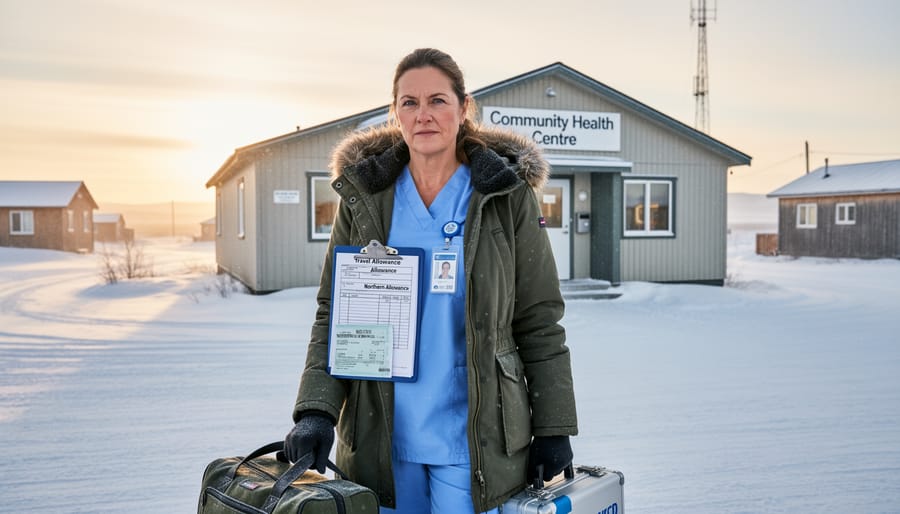
Registered nurses who work in remote and northern communities across Canada often discover that their total compensation packages rival or exceed those of specialized urban roles, thanks to a combination of factors that recognize the unique demands of these positions.
These nurses typically work in settings ranging from small community health centres to nursing stations where they may be the only healthcare provider for hundreds of kilometres. The expanded scope of practice in these areas means RNs often perform duties that would require specialized training or advanced practice roles in urban settings, including minor surgical procedures, emergency interventions, and extended diagnostic responsibilities.
The financial appeal of remote nursing extends well beyond base salary. Isolation allowances acknowledge the challenges of living far from urban amenities and family networks. Many positions include fully subsidized housing, eliminating what would be a major expense elsewhere. Some employers provide travel allowances with regular flights home, while others offer northern living allowances that significantly boost take-home pay.
Additional benefits often include accelerated vacation accrual, professional development funding, student loan forgiveness programs, and pension contributions that exceed standard packages. Some communities offer signing bonuses or retention incentives for nurses who commit to multi-year terms.
The combination of these elements creates total compensation packages that make remote nursing a financially strategic career move, particularly for nurses seeking to maximize earnings while gaining diverse clinical experience. The immersive nature of the work and tight-knit communities also provide professional growth and personal rewards that extend beyond the financial benefits.
10. Public Health Nurse
Public health nurses work at the intersection of healthcare and community wellness, focusing on disease prevention, health education, and population-level interventions rather than individual patient care. They design immunization programs, track communicable diseases, respond to public health emergencies, and address social determinants of health across diverse populations. This role requires strong assessment skills, cultural competency, and the ability to navigate complex social systems affecting community health outcomes.
Most public health nurses work for provincial health authorities, municipal health departments, or federal agencies like the Public Health Agency of Canada, which means stable government employment with comprehensive benefits packages. These positions typically offer defined benefit pension plans, generous vacation time, professional development funding, and work-life balance that’s difficult to find in acute care settings. The regular weekday schedules without mandatory overtime or shift work appeal to nurses seeking predictable hours, though outbreak response occasionally requires flexibility.
How to become a nurse in public health often starts with general nursing experience, then transitions through additional training in epidemiology, health promotion, and community assessment. While base compensation may sit lower on the nursing salary spectrum compared to specialized acute care roles, the total compensation package, including pension contributions, job security, and sustainable work conditions, makes public health nursing financially competitive over a career span. Many nurses find the preventive focus and population impact deeply rewarding, viewing public health as where they can create lasting change beyond individual patient encounters.
Factors That Influence Nursing Salaries in Canada
Understanding the factors that shape nursing salaries in Canada helps you make smarter career decisions and see your real earning potential. The gap between roles can be big. Pay for different nursing roles can differ by 40% or more depending on specialization and province, so the details matter.
A few variables do most of the work in setting what nurses actually take home:
- Specialization and education level: Advanced practice roles like Nurse Practitioners, Clinical Nurse Specialists, and Nurse Anesthetists sit at the top of the pay scale in 2026. Additional credentials in areas like critical care, perioperative nursing, or oncology can also qualify you for higher pay bands or specialty premiums.
- Provincial and territorial differences: Collective agreements vary across the country, so nurses in some provinces earn notably higher base rates than colleagues doing identical work elsewhere.
- Years of experience: Most union agreements use structured pay grids where your hourly rate climbs with each year of service, typically levelling off after 8 to 10 years.
- Geographic location: Urban centres tend to offer higher base salaries but also higher living costs. Rural and remote positions may add housing allowances, isolation pay, and northern living supplements that raise total compensation considerably.
- Union agreements: Bargaining outcomes shape your wages, benefits, shift premiums, and professional development funding.
- Shift differentials: Evening, night, weekend, and statutory holiday shifts usually pay premium rates, from a few extra dollars an hour up to time-and-a-half or double-time.
The numbers show how much role matters. Registered nurses in Canada earn a median of $43.27 an hour. Move into advanced practice and the average for an Advanced Practice Registered Nurse is $55.42 an hour, though that figure rests on a small sample of 13 salaries from Indeed job postings over the past 36 months, last updated October 16, 2026. On the leadership side, the average salary for a Clinical Nurse Manager is $111,886 per year. Treat these as reference points, not guarantees, since your province, employer, and experience will move the real figure.
Your employment setting counts too. Nurses in academic health centres or specialized facilities may earn differently than those in community hospitals or long-term care, even in the same city. Public sector positions often come with comprehensive benefits and defined pension plans, which add real value beyond the base rate.
Pay is only part of the picture, of course. The link between compensation and what excellence means in nursing goes beyond dollars. Many nurses weigh professional autonomy, learning opportunities, work-life balance, and alignment with their values right alongside salary when judging how satisfying a career really is.
Advancing Your Nursing Career and Salary
Investing in your professional development can open doors to higher-paying roles and greater career satisfaction in Canadian nursing. Many nurses successfully increase their earning potential by pursuing strategic certifications and credentials that align with their interests while positioning them for advancement.
Additional certifications in specialized areas like critical care, oncology, or wound care demonstrate expertise and often qualify you for specialty pay differentials. Advanced degrees, particularly a Master of Science in Nursing, prepare you for nurse practitioner, clinical nurse specialist, or leadership positions that typically offer enhanced compensation packages. Professional development through workshops, conferences, and continuing education keeps your skills current and signals commitment to excellence.
Here are practical steps to advance your nursing career and boost your compensation:
- Identify a specialization that interests you and research the certifications required in your province
- Discuss career development goals with your manager to explore opportunities within your current organization
- Join professional nursing associations that offer mentorship, networking, and access to specialized training
- Consider leadership courses or an MBA to prepare for management roles with increased responsibilities
- Build sustainable work habits that avoid burnout while pursuing additional credentials
- Seek out preceptorship or mentorship roles that develop teaching skills valued in educator positions
Career progression takes time and intentional planning. One Toronto ICU nurse moved into a clinical nurse specialist role after completing her master’s degree part-time over four years while working full-time. She strategically chose electives aligned with her unit’s needs, which helped her employer recognize her growing expertise and eventually created a CNS position that leveraged her specialized knowledge in cardiovascular critical care.
How We Chose This List
We selected these nursing roles based on three primary criteria: compensation positioning within Canada’s healthcare landscape, the credentials and expertise required for each role, and the availability of reliable market data to support our rankings.
First, we prioritized roles that consistently command higher compensation packages across multiple provinces, drawing on general employment trends rather than specific dollar figures that fluctuate by region and employer. Second, we considered the level of education, certification, and specialization each role demands, recognizing that advanced practice and technical expertise typically correlate with increased earning potential. Third, we included roles where compensation reflects not just base salary but total packages, such as northern nursing positions with isolation pay and housing allowances, or leadership roles with administrative responsibilities.
We also balanced clinical specialties with leadership and community-focused positions to represent the full spectrum of nursing career paths. Our methodology acknowledges that actual salaries vary significantly based on provincial regulations, collective agreements, years of experience, and workplace settings. This list reflects general compensation positioning rather than precise figures, empowering you to research specific opportunities in your province and specialty area while understanding broader career trajectories and the connection between advanced credentials and earning potential, knowledge that can inform both clinical practice and policy advocacy efforts.
Nursing Roles and Salaries in Canada Terms to Know
- Base Salary
- The standard hourly wage or annual income for a nursing position before additional compensation such as shift differentials, overtime, or location premiums are applied. Understanding base salary helps you compare roles across provinces and settings accurately.
- Shift Differential
- Extra pay added to your base rate for working less desirable hours, typically evenings, nights, weekends, or holidays. These premiums can significantly increase total earnings for nurses working non-standard schedules.
- Scope of Practice
- The legally defined set of procedures, assessments, and interventions a nurse can perform based on their credentials and provincial regulatory standards. Advanced roles like NPs have broader scopes that reflect their additional training and education.
- Collective Agreement
- A negotiated contract between nursing unions and employers that establishes wage scales, benefits, working conditions, and salary progression timelines. Most hospital and public health nurses in Canada work under these agreements.
- Isolation Allowance
- Additional compensation provided to nurses working in remote or northern communities to offset challenges like limited services, higher living costs, and geographic isolation. These allowances can make total compensation packages competitive despite lower base salaries.
When researching nursing roles, you’ll encounter these terms frequently in job postings, salary surveys, and professional discussions. Familiarizing yourself with this language helps you evaluate opportunities more effectively and understand how different compensation components combine to create your total earnings package. Provincial nursing regulatory bodies and professional associations often provide detailed information about scope of practice requirements for various roles, while union websites typically publish current collective agreements showing exact wage grids and progression schedules for represented positions.
Common Questions About Nursing Salaries in Canada
What can a new graduate nurse expect to earn in Canada?
Starting pay for registered nurses varies by province and employer, and most new graduates enter at the lower end of their province’s pay scale. For context, registered nurses in Canada earn a median of $43.27 an hour. Your own starting rate depends on the collective agreement in your region, whether you work in a hospital or community setting, and shift differentials for evenings, nights, or weekends.
How much do nursing salaries differ between provinces?
Quite a bit. Salary differences between nursing roles can reach 40% or more depending on specialization and province. Provincial gaps reflect different healthcare funding models, cost of living, and collective bargaining agreements. Western provinces and territories often offer higher base rates and added benefits to attract nurses, while each province sets its own pay scales through union negotiations and government healthcare budgets.
Should I negotiate my nursing salary, and how?
Most hospital and public health positions follow standardized union pay scales with little room for base salary negotiation. You can sometimes negotiate sign-on bonuses, relocation assistance, shift preferences, or professional development funding instead. In non-unionized settings like private clinics or corporate health, research comparable roles and be ready to discuss your certifications, experience, and specialized skills during salary discussions.
How quickly do nursing salaries increase over a career?
Most collective agreements include annual step increases based on years of service, typically moving nurses through several pay grades over their first decade of practice. You can speed things up with advanced certifications, specialized training, or leadership roles. Moving into advanced practice is the biggest jump. In 2026, the highest-paying nursing careers in Canada include Nurse Practitioners, Clinical Nurse Specialists, and Nurse Anesthetists. Leadership pays well too: the average salary for a Clinical Nurse Manager is $111,886 per year, and the average for an Advanced Practice Registered Nurse is $55.42 per hour. That APRN figure rests on a small sample of 13 salaries from Indeed job postings over the past 36 months, so treat it as a rough guide rather than a promise.
Beyond base salary, look at the full compensation package when comparing nursing positions. Pension contributions, health and dental coverage, professional development allowances, and paid time off add real value to your total earnings. Remote and northern positions often include housing subsidies, travel allowances, and isolation pay that can boost overall compensation well past the base rate.
Canada’s nursing profession offers a wide range of career paths, each with its own clinical challenges, room for growth, and financial rewards. Compensation shifts with your specialization, location, education level, and years of experience, but nursing careers salaries stay competitive across the country, and the work itself is stable and meaningful.
The roles covered in this article are only a fraction of what’s open to Canadian nurses. Advanced practice, critical care, leadership, education, and community health all offer paths that can match your interests with your financial goals. Keep in mind that the numbers here are general ranges. Your actual pay will reflect your credentials, geography, employer, and experience.
What matters most is finding your fit. The nurses who thrive aren’t necessarily the ones chasing the highest-paid positions. They’re the ones who’ve matched their skills and interests to roles where they can make a genuine difference. Canadian healthcare depends on dedicated nurses in every specialty and setting, and each role adds essential value to patient care and community wellbeing.
Canadian Frontline Nurses exists to support you throughout your career, whether you’re exploring your first nursing role or weighing your next move. We’re here to connect you with the resources, stories, and community you need to build a rewarding nursing career in Canada.
Eligibility requirements
Before you start comparing pay across nursing careers, it helps to know what actually gets you into the higher-paying roles. Salaries in Canada follow credentials, and the credentials come in stages.
Most nursing careers salaries start from the same foundation: a recognized nursing education program and registration with the regulatory body in the province or territory where you’ll work. Registered nurses, who earn a median of $43.27 an hour, sit at the base of this ladder. From there, the requirements stack up.
- Education level: Advanced practice roles such as Nurse Practitioner, Clinical Nurse Specialist, and Nurse Anesthetist are among the highest-paying nursing careers in Canada in 2026. They generally require education beyond the entry-level RN credential.
- Specialization: Pay can differ by 40% or more between specializations, so the area you train in matters as much as the title on your badge.
- Experience: Years on the job feed directly into pay. Management positions like Clinical Nurse Manager, which averages $111,886 a year, typically go to nurses with a track record in the field.
- Location: Provincial licensing and local pay scales shape what you’ll earn, and moving between provinces means re-checking registration rules.
For Advanced Practice Registered Nurses, one data set puts the average at $55.42 an hour. It’s drawn from 13 salaries on Indeed job postings over the past 36 months and was last updated on October 16, 2026, so treat it as a rough guide rather than a fixed benchmark.
The practical takeaway: confirm the requirements with your provincial regulator before you commit to a path. The salary is only reachable if you meet the criteria for the role.
How to apply / complete the process
Getting into a higher-paying nursing role in Canada follows a fairly predictable path. The steps below apply whether you’re starting out as an RN or moving toward an advanced practice position.
- Confirm your licence. Nursing is regulated province by province, so you’ll need to be registered with the regulatory body where you plan to work. Internationally educated nurses usually have extra assessment steps before they can register.
- Get your base role first. Registered nurses in Canada earn a median of $43.27 an hour, and that’s the foundation most specialty and leadership paths build on. Apply to postings through hospital, health authority, and long-term care career pages, and expect the hiring process to move through a résumé screen, an interview, and reference checks.
- Pick a direction early. Specialization, education level, location, and years of experience all shape pay, and the gap between roles can reach 40% or more depending on specialty and province. Nurse Practitioner, Clinical Nurse Specialist, and Nurse Anesthetist roles sit at the top of the 2026 pay picture.
- Complete the extra credentials. Advanced practice roles require graduate-level education, and many leadership or specialty posts ask for certification and documented clinical hours. Check the exact requirements with your provincial regulator and the program you’re considering before you commit.
- Apply with the specifics ready. For management roles, note that the average Clinical Nurse Manager salary is $111,886 per year in Canada. For advanced practice, the average Advanced Practice Registered Nurse rate is $55.42 per hour, based on 13 Indeed job-posting salaries over the past 36 months and last updated October 16, 2026. That’s a small sample, so treat it as a guide rather than a promise.
Keep a running record of your hours, certifications, and clinical experience from day one. You’ll need it at every step.
Where to get help
Salary questions rarely get settled by a search engine alone. The numbers shift by province, employer, and role, so the best answers usually come from people who can see your actual situation.
Start with your union or professional association if you already work as a nurse. Union representatives know the pay scales, step increases, and premiums that apply to your contract, and they can tell you what’s fixed and what isn’t. Your provincial nursing regulator is the right stop for questions about licensure and scope of practice, which matter a lot if you’re eyeing advanced practice roles like Nurse Practitioner or Clinical Nurse Specialist.
If you’re still a student or a new grad, your school’s career services office and your clinical placement supervisors are underrated. They know which local employers are hiring and what new grads realistically earn in your area.
For benchmarking, compare several sources instead of trusting one figure. Registered nurses in Canada earn a median of $43.27 an hour, while a Clinical Nurse Manager averages $111,886 a year. Those two numbers alone show how far pay can stretch with role and responsibility. Some salary averages rest on small samples. The Advanced Practice Registered Nurse figure of $55.42 an hour, for example, draws on just 13 job postings, so treat it as a rough guide.
Finally, talk to nurses in the role you want. A 20-minute conversation with someone doing the job will tell you more about real pay, schedules, and trade-offs than any salary table.