
Collaboration and communication in nursing aren’t optional soft skills. They’re the foundation of safe, effective patient care and directly determine clinical outcomes. When nurses communicate clearly with physicians, share critical information during handoffs, and work cohesively with interdisciplinary teams, patient safety improves, errors decrease, and care quality rises measurably.
In Canadian healthcare settings, where staffing pressures and complex patient needs continue to challenge frontline workers in 2026, these skills have become even more critical. A nurse working alone, no matter how skilled, can’t match the collective expertise of a well-coordinated team. The difference shows up in real ways: fewer medication errors, earlier detection of patient deterioration, and smoother transitions across care settings.
Sarah Chen, an emergency nurse at a Toronto hospital, experienced this firsthand during a critical trauma case. “We had a multi-vehicle accident patient who needed simultaneous interventions,” she recalls. “The way our team communicated, anticipated each other’s needs, and coordinated with the trauma surgeon made the difference. Everyone knew their role, spoke up when needed, and listened. That patient survived because we functioned as one unit.”
Yet barriers persist. Hierarchical dynamics, time constraints, and communication breakdowns between departments still create gaps in care. Understanding why collaboration matters is just the starting point. The real challenge lies in developing practical strategies to communicate effectively under pressure, navigate team conflicts, and build the kind of trust that allows nurses to speak up when patient safety is at stake.
Why Collaboration and Communication Matter in Nursing
In modern healthcare, patient care is no longer delivered by a single nurse working in isolation, it’s the result of coordinated effort among multidisciplinary teams that include physicians, pharmacists, respiratory therapists, social workers, and support staff. Effective collaboration and communication are the foundation that holds these teams together, directly influencing patient safety, care quality, and nurse well-being. When information flows smoothly and team members work in sync, patients receive comprehensive, timely care. When communication breaks down, the consequences can be severe.
Research consistently demonstrates that team communication improves safety by preventing medication errors, reducing diagnostic delays, and ensuring critical information reaches the right person at the right time. A missed handoff detail or unclear verbal order can lead to adverse events that harm patients and erode trust within teams. In the Canadian healthcare environment, where nurses often manage high patient loads across diverse populations and geographies, clear communication becomes even more critical.
Continuity of care depends on nurses effectively sharing patient status, treatment responses, and evolving needs across shifts and departments. When a nurse in emergency communicates thoroughly with the admitting unit, that patient’s care plan continues seamlessly. When communication falters, patients experience fragmented care, repeated assessments, and delayed interventions.
Beyond patient outcomes, collaboration sustains the nurses themselves. Teams that communicate openly and support one another create environments where nurses feel respected, reducing isolation and emotional exhaustion. In contrast, dysfunctional communication breeds frustration, moral distress, and turnover. Given the complexity of today’s healthcare challenges, aging populations, chronic disease management, staffing pressures, nurses cannot afford to work in silos. Collaboration transforms individual effort into collective strength, ensuring both patients and nurses thrive.
Core Elements of Effective Nursing Collaboration

Clear and Timely Information Sharing

Handoffs and shift reports are critical moments when critical details can be lost or misunderstood. When handoffs are standardized nurses consistently transfer information about patient status, pending tasks, and recent changes in condition without relying on memory alone. This consistency protects continuity of care across shifts and departments.
The SBAR framework has become a gold standard for structuring these conversations. By organizing information into Situation, Background, Assessment, and Recommendation, SBAR gives nurses a reliable format for sharing what matters most. Research confirms that SBAR improves patient safety by reducing communication errors and ensuring urgent details reach the right people quickly. Canadian nurses across hospital, community, and long-term care settings use SBAR daily to communicate with physicians, transfer patients between units, and escalate concerns effectively.
Documentation standards form another pillar of clear information sharing. Good nursing notes capture assessments, interventions, and patient responses in ways that teammates can understand and act on hours or days later. Nurses often reference nursing notes PDF resources to ensure their charting meets both legal requirements and practical communication needs. Timely, accurate documentation closes the loop, giving every team member the shared picture they need to deliver coordinated care.
Mutual Respect and Trust Among Team Members
Mutual respect and trust form the foundation of effective collaboration and communication in nursing. When team members value each other’s expertise, whether it comes from a newly graduated nurse observing subtle patient changes or a seasoned practitioner sharing years of clinical wisdom, the entire care environment strengthens. This respect crosses professional boundaries too: nurses who genuinely listen to physiotherapists, pharmacists, and social workers create richer, more comprehensive care plans than those who work in isolation.
Psychological safety makes the difference between a team that catches errors and one that buries them. Nurses must feel confident raising concerns about a medication order, questioning a treatment plan, or admitting uncertainty without fear of dismissal or retaliation. In Canadian healthcare settings where hierarchies can run deep, fostering this safety requires conscious effort from both formal leaders and peers. Simple practices help: acknowledging contributions in huddles, responding to questions without defensiveness, and normalizing phrases like “I need a second opinion on this” or “Help me think through what I might be missing.”
Trust builds incrementally. It grows when nurses follow through on commitments, share credit for successes, and support colleagues through difficult shifts rather than criticizing from the sidelines. Teams that cultivate mutual respect don’t just communicate better, they retain staff, improve morale, and consistently deliver safer patient care.
Shared Goals and Accountability
When every member of a nursing team understands they’re working toward the same outcome, safe, effective patient care, collaboration becomes much more natural. Shared goals act as a compass during hectic shifts. Instead of nurses working in parallel, they work together, checking in on progress and adjusting the plan as a patient’s condition changes. This alignment prevents gaps in care and ensures nothing falls through the cracks during handoffs or role transitions.
Accountability reinforces that alignment. In a collaborative culture, nurses don’t just hand off tasks; they take collective ownership of results. If a wound dressing needs changing before discharge, the team ensures it happens, whether that falls to the assigned nurse, a colleague covering a break, or someone stepping in during an emergency. This collective responsibility doesn’t dilute individual accountability; it strengthens it, because nurses know their teammates are counting on them just as they count on others.
Patient-centered goals also clarify priorities when resources are stretched. A team caring for a complex post-surgical patient might agree their shared goal is preventing infection and managing pain effectively. That common focus helps everyone from the bedside nurse to the charge nurse make consistent decisions about time, communication with the physician, and family teaching. When goals are explicit and everyone commits to them, the whole team moves forward together.
Communication Strategies That Strengthen Nursing Teams
Interprofessional Communication
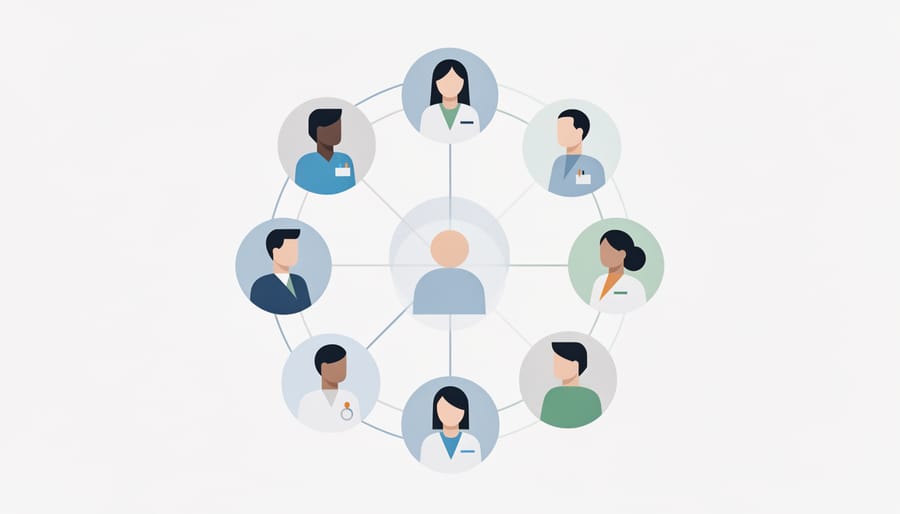
Nurses serve as the central hub in most care teams, translating patient needs across disciplines and ensuring everyone works from the same page. Strong interprofessional communication means knowing how to reach the right person quickly, presenting information in the format they need, and confirming that your message was understood. When a patient’s condition changes, the nurse who calls the physician with a concise SBAR update, pages the pharmacist about a potential drug interaction, and coordinates with the social worker on discharge barriers is practicing collaboration in real time, not just passing along tasks.
Effective communication across professions requires adapting your approach: physicians often value brevity and decision points, pharmacists appreciate specifics on timing and routes, and social workers need context about family dynamics and community resources. Use shared language and avoid discipline-specific jargon that obscures the point. Close the loop by confirming the plan in the chart and following up verbally if there’s ambiguity. In complex cases, brief huddles or rounds where all team members contribute prevent fragmented care and catch issues early. Respect for each profession’s expertise, and the confidence to speak up when you notice something others may have missed, strengthens the entire team and keeps the patient at the center.
Patient and Family Communication
Patients and families are essential partners in the care team, and effective collaboration depends on the quality of communication nurses establish with them. Clear, compassionate dialogue helps patients understand their diagnosis, treatment options, and care plans, empowering them to participate actively in decisions. When nurses take time to explain procedures in plain language, verify understanding through teach-back methods, and invite questions, they reduce anxiety and improve adherence to care recommendations.
Advocacy is a natural extension of this communication. Nurses often serve as translators between medical jargon and patient comprehension, ensuring families grasp what physicians have explained and feel heard when expressing concerns. In Canadian settings, where language diversity and cultural differences are common, nurses adapt their approach, using interpreters, visual aids, and culturally sensitive explanations to bridge gaps.
Family involvement also strengthens continuity of care. Nurses who communicate openly with caregivers about discharge plans, medication schedules, and warning signs to monitor at home create safety nets beyond hospital walls. This collaborative approach recognizes that healing happens in partnership, not isolation. When patients and families trust their nurse, they share critical information more freely, ask for help sooner, and become active participants rather than passive recipients of care.
Real Stories: Canadian Nurses Leading Through Collaboration
When Grace, an emergency department nurse in Halifax, noticed medication errors were creeping up during shift changes, she didn’t wait for management to intervene. She gathered her colleagues and proposed a simple fix: a two-minute huddle before every handoff where outgoing and incoming nurses stood together at the bedside, reviewed the care plan with the patient present, and confirmed outstanding tasks. Within weeks, errors dropped significantly. More importantly, nurses felt more connected to their colleagues and patients felt safer knowing multiple nurses were tracking their care.
This kind of grassroots collaboration happens daily across Canadian nursing, though it rarely makes headlines.
In a rural Saskatchewan long-term care home, nursing assistant Maria noticed tension brewing between day and night staff over incomplete documentation. Rather than letting resentment build, she suggested both shifts overlap for thirty minutes twice weekly to discuss resident updates face-to-face. The facility director supported the trial, adjusting schedules to make it possible. Those brief conversations uncovered misunderstandings that written notes alone couldn’t resolve. Night staff learned why certain tasks were delayed; day staff understood the challenges of managing behaviours during evening hours. The overlap meetings became permanent, and staff turnover decreased.
Collaboration doesn’t always mean harmony. Jennifer, a nurse practitioner in a Toronto community health centre, describes a heated disagreement with a physician over a patient’s discharge plan. Instead of deferring or withdrawing, she requested a brief meeting and used SBAR to present her clinical concerns clearly. The physician initially resisted but agreed to revisit the evidence together. They modified the plan, incorporating both perspectives. The patient avoided a preventable readmission. Jennifer credits that exchange with improving their working relationship and encouraging her to speak up confidently in future disagreements.
These stories share common threads: nurses who recognized a gap, initiated honest conversation, and stayed committed to the team’s shared goal of better patient care. They didn’t wait for perfect conditions or formal programs. They started small, communicated clearly, and trusted their colleagues to meet them halfway. That’s how collaboration becomes real in the daily work of nursing.
Overcoming Barriers to Collaboration in Nursing
Even in supportive teams, collaboration faces real obstacles. Hierarchical cultures where junior nurses hesitate to speak up, chronic time pressures, understaffing, and siloed departments each create friction that communication alone cannot always resolve. Canadian nurses working in remote or rural settings face additional challenges: geographic isolation, limited access to specialists, and fewer colleagues to consult. Recognizing these barriers honestly is the first step toward dismantling them.
Hierarchical traditions persist in some clinical environments, where physicians or senior staff dominate decisions and nurses feel their input is unwelcome. Flatten these dynamics by championing structured communication tools like SBAR, which give every team member a clear framework to voice observations and recommendations. Encourage unit leaders to model openness, ask for nursing input during rounds, and publicly value diverse perspectives. When nurses see that speaking up leads to positive change, they become more confident contributors.
Time scarcity and heavy patient assignments make collaboration feel like a luxury. Counter this by embedding communication into existing workflows rather than treating it as extra work. Quick bedside huddles before procedures, streamlined electronic handoffs, and shared digital platforms reduce redundant conversations. Standardizing shift report formats saves time while improving consistency, and clear delegation ensures everyone knows their role without constant clarification.
Siloed departments fragment care when nurses in the emergency department, medical units, and community services operate without understanding one another’s pressures or processes. Bridge these gaps through cross-departmental education sessions, shared quality improvement projects, and regular interprofessional rounds. Rotating assignments or shadowing opportunities help nurses appreciate the full patient journey and identify handoff points where communication breaks down.
In rural and northern Canada, distance limits real-time collaboration. Telehealth platforms, secure messaging apps, and virtual case conferences connect isolated nurses with specialists and peer support networks. Regional nursing associations and online communities provide forums to share protocols and troubleshoot challenges collectively, reducing the professional isolation that rural practice can bring.
Frequently Asked Questions About Nursing Collaboration and Communication
How can new nurses develop collaboration and communication skills?
Start by observing experienced nurses during handoffs and team rounds, asking questions when protocols are unclear, and practicing structured communication tools like SBAR. Seek feedback from mentors and peers, and participate in interprofessional case reviews or simulation exercises when available.
What should I do if communication breaks down with a colleague?
Address the issue directly and privately when possible, focusing on specific behaviors rather than personal criticism. Use “I” statements to express how the breakdown affects patient care, and propose concrete steps to improve future interactions. If the conflict persists or compromises safety, involve a charge nurse or manager.
How does nursing collaboration differ across care settings?
Hospital environments often require rapid, shift-based communication with large multidisciplinary teams, while community and home care settings demand strong relationship-building over time with patients, families, and fewer healthcare professionals. Long-term care facilities emphasize continuity and deep knowledge of residents, requiring sustained coordination with personal support workers and allied health staff.
What resources help Canadian nurses improve teamwork and communication?
Provincial nursing associations offer continuing education on interprofessional practice, while networks like Canadian Frontline Nurses provide peer support and practical insights from nurses across diverse settings. Many healthcare organizations also run in-house communication workshops and team-building initiatives tailored to local practice contexts.
Beyond these common questions, remember that collaboration in nursing is a practiced skill, not an innate trait. Every interaction, whether a brief hallway update or a complex discharge planning meeting, offers a chance to strengthen your communication approach. Pay attention to what works in your setting, adapt tools to fit your team’s rhythm, and ask colleagues what communication strategies they find most effective. Over time, these small adjustments compound into stronger working relationships and safer patient care.
Collaboration and communication aren’t abstract ideals or optional extras in nursing, they’re fundamental competencies that directly protect patient safety and sustain the resilience of healthcare teams. Every handoff, every interdisciplinary round, every clarifying question asked contributes to a culture where patients receive coordinated care and nurses feel supported rather than isolated. When communication breaks down or collaboration falters, the consequences can be serious: missed information, preventable errors, and burned-out colleagues struggling alone.
Canadian nurses have shown repeatedly that strengthening these skills creates tangible improvements in care quality and workplace morale. The stories shared throughout this article illustrate what’s possible when teams commit to clear communication, mutual respect, and shared accountability. These practices don’t require sweeping policy changes to begin, they start with individual nurses choosing to listen actively, speak up when needed, and extend support to colleagues.
Connecting with peers beyond your immediate unit can deepen your collaborative practice. Networks like policy advocacy initiatives and organizations such as Canadian Frontline Nurses offer spaces to share experiences, learn from diverse practice settings, and advocate together for environments that prioritize teamwork. Continue building your communication skills, seek mentorship, and contribute to the collaborative culture nursing demands. Your voice and your commitment to working together strengthen not just your team, but the entire profession.