Excellence in nursing is the consistent delivery of patient care that exceeds minimum standards through clinical expertise, compassionate communication, evidence-based practice, and continuous professional growth. It represents the difference between a nurse who meets basic job requirements and one who transforms patient outcomes, champions safety innovations, and elevates the profession through every shift.
For Canadian nurses at every career stage, understanding excellence matters now more than ever. Healthcare systems across the country face unprecedented pressures, from staffing shortages to increasingly complex patient needs. In this environment, excellence isn’t a luxury reserved for award ceremonies. It’s the practical framework that helps nurses provide exceptional care while protecting their own wellbeing and professional satisfaction.
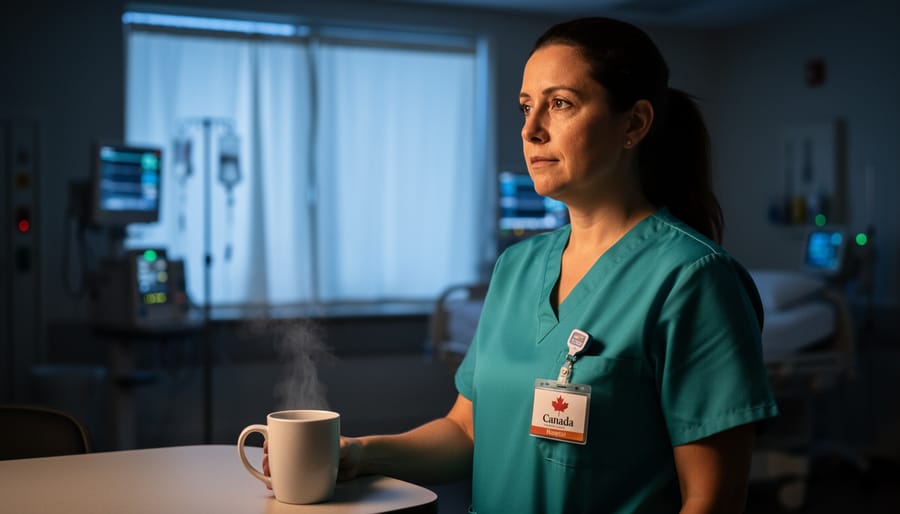
But what does excellence actually look like in the break room at 3 a.m., during a code blue, or when faced with a patient who has lost hope? Sarah Chen, a critical care nurse in Vancouver, describes it simply: “Excellence is when you see a patient’s condition changing before the monitors catch it, when you advocate for pain management even though it means pushback, when you mentor a new grad through their first death even though you’re exhausted.” Her definition points to something measurable yet deeply human.
This article unpacks the core components of nursing excellence, from clinical judgment and ethical practice to interpersonal skills and systems thinking. You’ll discover how excellence operates in real Canadian healthcare settings, explore the distinct domains where it manifests, and learn practical ways to recognize and cultivate it in your own practice. Whether you’re a student defining your professional identity or an experienced nurse seeking renewed purpose, understanding excellence provides the roadmap for meaningful, sustainable nursing practice in 2026 and beyond.
What Excellence in Nursing Means
Excellence in nursing extends far beyond meeting professional requirements or simply doing your job correctly. It represents a commitment to delivering the highest quality of care while continually advancing your knowledge, skills, and understanding of patients as whole people.
At its core, nursing excellence integrates five interconnected pillars. Clinical competence forms the foundation, possessing deep knowledge of anatomy, pharmacology, pathophysiology, and treatment protocols while applying this expertise with sound clinical judgment. But competence alone isn’t enough. Excellence requires compassionate care that honours each patient’s dignity, cultural background, and individual circumstances. It means seeing the person behind the diagnosis and tailoring your approach accordingly.
Continuous learning distinguishes excellent nurses from those satisfied with baseline competency. Healthcare evolves constantly, new research emerges, technologies advance, and best practices shift. Excellent nurses embrace this reality through ongoing education, whether pursuing advanced certifications, attending workshops, or staying current with evidence-based research. The Continuing competence commitment recognizes this professional obligation across Canadian nursing regulators.
Patient advocacy represents another essential dimension. Excellence means speaking up when care falls short, questioning orders that don’t align with patient needs, and ensuring vulnerable populations receive equitable treatment. This advocacy extends beyond bedside care to include contributing to policy discussions and system improvements.
Finally, ethical practice anchors everything. Excellent nurses navigate complex moral terrain daily, balancing competing priorities, maintaining confidentiality, respecting autonomy, and upholding professional boundaries even when it’s difficult.
The distinction matters because minimum standards represent the floor, not the ceiling. Meeting basic requirements keeps your license active. Excellence transforms nursing practice into something that genuinely changes outcomes, builds trust, and advances the profession. It’s not a destination you reach and maintain forever. Rather, it’s an ongoing journey of growth, reflection, and commitment to being better tomorrow than you are today.
Core Components of Excellence in Nursing Practice
Clinical Knowledge and Technical Skill

Clinical excellence starts with a solid foundation of knowledge and the technical precision to apply it safely. Evidence-based clinical decisions require nurses to integrate current research with patient values and clinical expertise, moving beyond “that’s how we’ve always done it” to asking what the best evidence supports. This means regularly reviewing updated guidelines, understanding the rationale behind protocols, and questioning practices that lack evidence.
Mastering technical skills goes beyond simply performing a procedure correctly. It involves understanding when each intervention is appropriate, recognizing subtle signs of complications, and adapting techniques to individual patient needs. A nurse demonstrating excellence doesn’t just insert an IV, they assess vein quality, choose the optimal site based on planned treatment, anticipate potential challenges in patients with difficult access, and document the procedure thoroughly.
Critical thinking ties knowledge and skill together. When a patient’s vital signs don’t match their appearance, when standard protocols don’t fit unusual circumstances, or when nursing documentation reveals patterns others might miss, excellence means pausing to analyze rather than proceeding on autopilot. Canadian nurses practicing at this level continuously update their knowledge through journal reading, attending workshops, pursuing specialty certifications, and learning from every patient encounter.
Patient-Centred and Compassionate Care
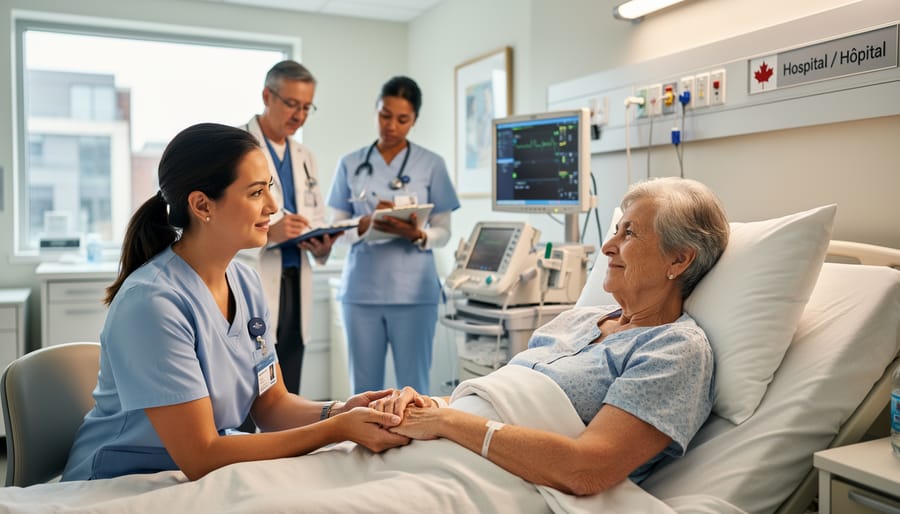
Patient-centred excellence starts with seeing the whole person, not just the diagnosis on the chart. In Canada’s diverse communities, this means recognizing how culture, language, lived experience, and personal values shape each patient’s health journey. A nurse practicing excellence asks questions that matter: What does healing look like in your family’s tradition? Who do you want involved in care decisions? What fears are you carrying that we haven’t talked about yet?
Cultural safety goes beyond accommodation. It requires nurses to examine their own biases, understand power imbalances in healthcare, and create space where patients feel genuinely heard and respected. The College of Nurses of Ontario notes that culturally safe care includes dignity which means adapting communication styles, respecting traditional practices alongside Western medicine, and never assuming what matters to someone based on appearance alone.
Therapeutic communication is a skill excellent nurses refine throughout their careers. It’s the ability to sit with a frightened patient in the ER, really listen to a senior struggling with multiple medications, or notice what a new mother isn’t saying during a postpartum assessment. Excellence shows in the small gestures: remembering someone’s preferred name, explaining procedures in plain language, and recognizing when silence speaks louder than words.
Professional Development and Adaptability
Excellence in nursing demands a commitment to lifelong learning that goes beyond initial registration. Canadian nurses pursue additional certifications, whether in wound care, palliative care, or critical care, to deepen their expertise and better serve their patients. They attend conferences, participate in online courses, and read current research to stay informed about evolving best practices and changes to their scope of practice.
Adaptability matters just as much as knowledge acquisition. Excellent nurses embrace new technologies, from electronic health records to telehealth platforms, and adjust their approaches when evidence shifts or patient needs change. They mentor newer colleagues, sharing hard-won insights while remaining open to fresh perspectives. This combination of continuous growth and flexibility ensures nurses can meet today’s challenges while preparing for tomorrow’s healthcare landscape.
Collaboration and Leadership
Excellence in nursing demands strong collaboration and communication skills that extend beyond individual patient interactions. Excellent nurses work seamlessly within interdisciplinary teams, respecting the expertise of physicians, pharmacists, social workers, and other healthcare professionals while contributing their unique nursing perspective. They speak up when patient safety is at risk, even when it’s uncomfortable, and advocate not just for individual patients but for systemic improvements that benefit entire populations. In Canadian healthcare settings, this might mean proposing changes to discharge protocols in long-term care, mentoring new graduates through challenging cases, or addressing workplace issues that affect care quality. Leadership doesn’t require a formal management title, it shows up when a nurse facilitates better team communication during shift handovers, mediates conflicts constructively, or champions initiatives that improve staff well-being and retention. These nurses understand that healthy workplace cultures directly impact patient outcomes, and they actively contribute to environments where colleagues feel supported, respected, and empowered to deliver their best work.
How Excellence in Nursing Works in Practice
Excellence in nursing isn’t confined to textbooks or performance reviews, it unfolds in the real, often messy moments of patient care. In a Winnipeg emergency department, a nurse notices a patient’s subtle change in breathing pattern during triage. She doesn’t dismiss it as anxiety. Instead, she expedites the assessment, advocates for immediate imaging, and catches a pulmonary embolism before it becomes fatal. That split-second decision, grounded in clinical knowledge and patient attentiveness, exemplifies how excellence looks like in 2026.
In a Toronto long-term care facility, excellence shows up differently. A nurse caring for a resident with advanced dementia learns that the woman was a pianist. She brings in recordings of Chopin during morning care. The resident, usually agitated during bathing, relaxes and hums along. This nurse didn’t just complete a task, she saw the person, adapted her approach, and transformed a routine moment into one of dignity and connection.
Rural practice demands yet another form of excellence. A nurse in northern Saskatchewan manages a clinic 400 kilometres from the nearest hospital. When a teenager arrives with abdominal pain, she can’t simply order a CT scan or consult a specialist down the hall. She draws on her assessment skills, calls the on-call physician, arranges medevac transport, and stays with the family until help arrives. Her excellence lies in working confidently within resource constraints while ensuring the patient receives appropriate care.
Community health nurses demonstrate excellence through persistence and cultural humility. An Indigenous health nurse in British Columbia spends months building trust with a pregnant woman who’s avoided prenatal care due to past negative healthcare experiences. Rather than lecturing about risks, she listens, acknowledges historical trauma, and collaborates with traditional healers. When the woman delivers a healthy baby after consistent prenatal visits, that outcome reflects the nurse’s commitment to patient-centred care over quick fixes.
These scenarios share common threads: critical thinking applied to specific contexts, seeing patients as whole people, adapting evidence-based knowledge to real situations, and making decisions that prioritize safety and dignity even under pressure.
Different Forms of Nursing Excellence Across Settings
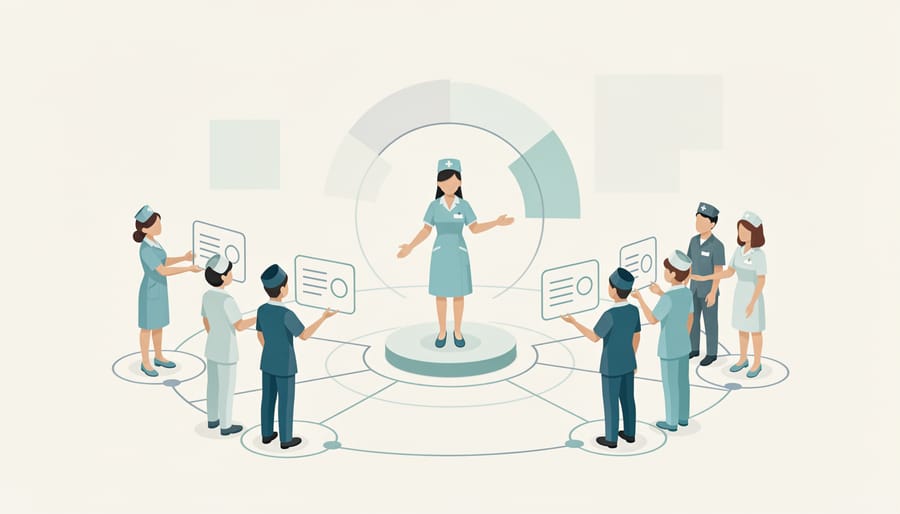
Excellence in nursing isn’t one-size-fits-all. A nurse working in a downtown Toronto emergency department demonstrates excellence differently than one providing care in a remote Nunavut nursing station, yet both embody the same fundamental commitment to outstanding practice. The Canadian healthcare landscape, with its vast geography, diverse populations, and varied practice models, creates unique contexts where nursing excellence takes distinct forms.
In acute care hospital settings, excellence often means rapid assessment skills, precise technical competence during high-pressure interventions, and seamless coordination with large interdisciplinary teams. A critical care nurse demonstrates excellence by anticipating complications, advocating for evidence-based protocols, and maintaining compassionate communication with families during crisis moments.
Community health nurses show excellence through relationship-building, cultural humility, and addressing social determinants of health. They might spend an hour helping a newcomer family navigate Canada’s healthcare system, connecting them with settlement services, or adapting health education to match literacy levels and cultural contexts.
Excellence manifests across many Canadian practice environments:
- Acute care hospitals: Managing complex patients, rapid response, technology proficiency
- Community health centres: Health promotion, harm reduction, building trust with marginalized populations
- Indigenous health programs: Cultural safety, trauma-informed care, community partnership
- Mental health services: Therapeutic relationships, de-escalation skills, reducing stigma
- Home care: Clinical autonomy, family education, creative problem-solving with limited resources
- Remote nursing stations: Broad clinical scope, independent practice, adapting to resource constraints
Nurses in rural and remote settings demonstrate excellence through remarkable clinical breadth and resourcefulness. They might stabilize a cardiac patient, assist with childbirth, and provide primary care for a child’s ear infection, all in one shift, while coordinating medevac transport across challenging distances.
Specialty nurses in fields like palliative care, oncology, or neonatal intensive care develop deep expertise in their domains. Their excellence shows through anticipating patient needs, providing expert symptom management, and supporting families through vulnerable transitions.
Excellence also extends beyond direct care. Nurse educators shape future practitioners, research nurses advance evidence, and those engaged in policy advocacy improve healthcare systems. Each role requires different skills, but excellence in any setting means bringing full commitment to patients and the profession.
Where Excellence in Nursing Makes an Impact
Excellence in nursing creates measurable improvements that ripple across every level of healthcare. When nurses commit to excellence, the benefits extend far beyond individual patient interactions.
Patient Safety and Outcomes
Excellent nurses catch medication errors before they happen, identify subtle changes in patient conditions early, and prevent complications through vigilant assessment. In Canadian hospitals, units with higher concentrations of experienced, excellence-focused nurses consistently show lower rates of falls, pressure injuries, and hospital-acquired infections. A nurse’s refusal to accept “good enough” often means the difference between a patient going home healthy or developing a preventable complication.
Healthcare Team Performance
Excellence is contagious within teams. When one nurse demonstrates meticulous documentation, advocates effectively for patients, or mentors newer colleagues with genuine investment, it raises standards for everyone. In Alberta’s rural hospitals and Ontario’s emergency departments, strong nursing leadership rooted in excellence improves staff retention, reduces burnout, and creates cultures where speaking up about safety concerns becomes the norm rather than the exception.
System-Level Change
Nurses who pursue excellence often become the voices driving policy improvements. They bring frontline insights to provincial health authorities, contribute to clinical practice guideline development, and advocate for changes in staffing models or resource allocation. Quebec nurses led innovations in PICC line management that reduced infection rates province-wide. BC nurses championed harm reduction approaches that transformed addiction care protocols across multiple health regions.
Professional Advancement
Excellence opens doors. Nurses recognized for exceptional practice gain opportunities to present at conferences, participate in research initiatives, teach the next generation, and shape the future of Canadian healthcare. Their expertise becomes a resource that strengthens the entire profession.
Common Questions About Excellence in Nursing
Can excellence in nursing actually be measured?
Excellence can’t be reduced to a single metric, but nurses and managers often measure it through patient outcomes, peer feedback, quality indicators like infection rates or medication errors, and participation in professional development. The most meaningful measure combines objective data with qualitative evidence of patient experience and professional growth.
How can I pursue excellence when I’m already stretched thin at work?
Excellence doesn’t require perfection or extra hours, it lives in small, intentional choices like truly listening to a patient, double-checking a medication, or speaking up about a safety concern. Even in resource-constrained environments, you can demonstrate excellence by advocating for better conditions while delivering thoughtful care within your current reality.
Is excellence only achievable for experienced nurses?
Absolutely not. New graduates can demonstrate excellence through eagerness to learn, asking thoughtful questions, and treating every patient with dignity and compassion. Excellence grows with experience, but the commitment to doing your best work starts on day one of your career.
How does excellence relate to provincial nursing standards and competencies?
Provincial standards set the minimum competency floor, what you must do to practice safely. Excellence begins where those standards end, pushing you toward continuous improvement, deeper patient connections, and contributions that advance the profession beyond baseline expectations.
Do I need certifications to be considered an excellent nurse?
Certifications demonstrate commitment to specialized knowledge and can enhance your practice, but they’re not the only path to excellence. Many outstanding nurses excel through clinical expertise, mentorship, patient advocacy, and compassionate care without formal credentials beyond their initial registration.
What if my workplace doesn’t recognize or support excellence?
Recognition is validating, but excellence is ultimately about your professional integrity and the care you provide, not external validation. Document your achievements, seek mentorship outside your immediate workplace, and connect with professional communities that value and celebrate nursing excellence even when your employer falls short.
These questions reflect what many Canadian nurses genuinely wonder as they navigate their careers. The tension between aspiring to excellence and facing real workplace constraints, short staffing, limited resources, unsupportive management, is particularly acute in today’s healthcare environment. Understanding that excellence isn’t an all-or-nothing proposition helps nurses recognize the value they bring even in imperfect conditions.
The relationship between formal credentials and excellence deserves attention too. While certifications and advanced education can deepen your expertise, some of the most excellent nurses work without specialized credentials, bringing decades of wisdom, exceptional interpersonal skills, and unwavering patient advocacy to their practice. Excellence shows up in how you think, communicate, and care, not just in letters after your name.
Key Nursing Terms Related to Excellence
- Evidence-Based Practice
- The integration of current research findings, clinical expertise, and patient preferences to make informed care decisions. In Canadian nursing, this means staying current with nursing journals, practice guidelines, and research from organizations like the Canadian Nurses Association.
- Clinical Competence
- The knowledge, skills, judgment, and attitudes required to practice safely and effectively in your nursing role. This goes beyond basic proficiency to include critical thinking, problem-solving abilities, and the confidence to act in complex patient situations.
- Patient Advocacy
- Actively supporting and protecting patients’ rights, preferences, and best interests within the healthcare system. Canadian nurses often advocate for equitable access to care, cultural safety, and patient-centred decision-making.
- Cultural Safety
- An approach to care that recognizes power imbalances in healthcare and works to provide respectful, responsive care that meets the cultural, social, and spiritual needs of patients. Particularly important in Canadian nursing practice when caring for Indigenous peoples and diverse communities.
- Reflective Practice
- The deliberate process of examining your own experiences, decisions, and actions to identify learning opportunities and improve future practice. Reflective nurses regularly ask themselves what worked well, what could have been better, and how they can grow.
- Professional Autonomy
- The authority and responsibility to make independent clinical judgments within your scope of practice, based on your education and expertise. In Canada, this includes the right to practice according to provincial nursing standards while exercising professional judgment in patient care.
These terms form the foundation of conversations about nursing excellence and appear frequently in professional development resources, nursing literature, and workplace discussions across Canadian healthcare settings. Understanding this shared vocabulary helps nurses articulate their practice standards and engage meaningfully with colleagues about what excellence looks like in action.
Excellence in nursing isn’t a destination you reach and then forget about. It’s a commitment you renew with every shift, every patient interaction, every moment you choose growth over complacency. As a Canadian nurse, you’re part of a professional community that sets the standard for compassionate, competent care, not just for yourself, but for colleagues, patients, and the future of healthcare in this country.
The nurses who define excellence don’t wait for perfect conditions. They find ways to deliver outstanding care within real constraints, learn from difficult days, and lift up those around them. Whether you’re working your first shift or your thousandth, you have something valuable to contribute to this collective pursuit.
Organizations like Canadian Frontline Nurses exist to support you in this journey, connecting you with resources, advocacy, and a community that understands what you face every day. But the most powerful force for advancing nursing excellence is you: your willingness to share what you’ve learned, mentor someone struggling, speak up when something needs to change, and show up fully for the people who trust you with their care.
Your story matters. Tell it.