

In 2026, registered nurses in Canada earn an average of $89,273 annually, with significant variation across roles, provinces, and specializations. If you’re exploring nursing as a career or considering a move within the profession, understanding the full salary landscape is essential for making informed decisions about your future.
The compensation picture for Canadian nurses extends far beyond basic RN rates. Entry-level practical nurses, specialized nurse practitioners, and federal government positions each occupy distinct salary brackets, with some roles reaching $136,540 per year. Geographic location plays a substantial role too. Toronto RN salaries, for instance, run 119% higher than the national average, while remote and isolated community positions often include northern allowances and unique benefits packages.
Sarah Chen, a nurse practitioner in Alberta, remembers the moment she realized her career path would significantly impact her earning potential. “I loved bedside nursing, but when I looked at the salary progression and scope of practice as an NP, I knew I needed to map out where I wanted to be in five years,” she explains. That clarity helped her target specific certifications and roles that aligned with both her clinical interests and financial goals.
Right now, federal departments including Indigenous Services Canada, Correctional Service Canada, and National Defence are actively hiring across multiple provinces, with over 3,000 nursing positions available through platforms like Nursing Careers Canada. These opportunities span salary filters from $60,000 to well over $100,000, reflecting the diversity of roles and responsibilities within Canadian healthcare.
This guide breaks down 2026 salary data across ten distinct nursing positions, organized from entry-level to top-earning roles, so you can benchmark your current compensation and identify your next career move with confidence.
Understanding Canadian Nursing Compensation
Canadian nursing compensation operates on several distinct structures that can significantly impact your take-home pay. Understanding these systems helps you evaluate job offers and plan career moves strategically.
Most nursing positions in Canada fall into two broad categories: hourly wage positions and salaried roles. Hourly positions are common for registered nurses, licensed practical nurses, and registered practical nurses working in hospitals, long-term care facilities, and community settings. These positions typically pay between $43 per hour in major markets like Toronto and up to $40.92 per hour for certain federal positions in remote communities. Salaried positions, often associated with advanced practice roles like nurse practitioners and specialized positions such as practice advisors, can reach $136,540 annually in federal departments including Indigenous Services Canada and National Defence.
Provincial variations create substantial differences in compensation across the country. A registered nurse in Toronto earns an average of $89,273 annually, which sits 119% above the national average, reflecting both the city’s higher cost of living and competitive healthcare market. Job postings across Ontario, Alberta, and British Columbia show concentration in these provinces, with salary filters on major job boards ranging from $60,000 to over $100,000 depending on role and location.
Several factors influence where you land within these ranges:
- Wage Grid
- A structured salary scale that increases compensation based on years of experience, typically advancing annually until you reach the maximum rate for your classification.
- Collective Agreement
- A negotiated contract between nursing unions and employers that sets minimum wages, benefits, and working conditions for unionized positions.
- Base Salary
- Your regular compensation before additional premiums, overtime, or differentials are applied.
- Premium Pay
- Additional compensation for working evenings, nights, weekends, or statutory holidays, often calculated as a percentage above base rate.
- Remote Community Differential
- Extra compensation provided for positions in isolated or northern communities to offset challenges like limited services and higher living costs.
Your employment sector also shapes compensation structure. Federal positions often offer comprehensive benefit packages and defined pension plans alongside competitive base salaries. Provincial health authorities typically operate under collective agreements with established wage grids, while private sector employers may offer more flexible but variable compensation packages.
Experience level remains the most consistent factor affecting pay. Entry-level practical nurses start at the bottom of their wage grid, while nurse practitioners with years of specialized experience command top-tier salaries. Specialty certifications in areas like emergency, critical care, or occupational health can unlock higher-paying positions and accelerate movement through wage scales.
How We Selected These Top Nursing Roles
We built this ranking by analyzing thousands of current nursing positions across Canada, prioritizing roles that offer both competitive compensation and genuine career viability. Our selection criteria balanced salary levels with job availability, ensuring each featured role represents an actual opportunity rather than an outlier position.
Salary competitiveness formed our primary filter, but we looked beyond base pay to consider the complete picture: shift differentials, northern allowances, housing benefits, and pension contributions. We examined job postings from federal departments like Indigenous Services Canada and Correctional Service Canada alongside provincial health authorities and private employers to capture the full range of compensation models.
Role prevalence mattered too. We included positions with substantial hiring activity across multiple provinces, not just niche opportunities in single locations. The Nursing Careers Canada platform alone lists over 3,200 active positions, giving us a robust sample to identify which roles consistently offer strong pay.
We deliberately selected roles spanning different credentials (RN, NP, RPN, LPN) and work environments (urban hospitals, remote communities, federal facilities, corporate settings) to reflect the diversity of Canadian nursing. Each position in our top ten represents a distinct career path with documented salary data and active recruitment in 2026.
Top 10 Nursing Roles and Their Salaries
10. Practical Nurse, Entry Point to Healthcare

Licensed Practical Nurses (LPNs) and Registered Practical Nurses (RPNs) represent the accessible entry point into Canada’s nursing profession, with salaries that reflect both the essential nature of their work and room for growth. These roles typically start in the $40,000 to $55,000 annual range, with hourly rates clustering around $20 to $27 depending on province, experience, and setting.
Practical nurses work across diverse environments. Long-term care facilities employ the largest share, where they provide hands-on resident care and medication administration. Hospitals utilize practical nurses on medical-surgical units and rehabilitation floors, while community health agencies deploy them for home visits and clinic support. This variety means practical nurses can find positions that match their preferred pace and population.
Career progression is built into the practical nursing pathway. Many practitioners use their LPN credential as a foundation, gaining clinical experience while pursuing bridging programs to become Registered Nurses. This strategic approach appears in our compensation guide as one way to access the top nursing roles over time. Practical nursing delivers immediate employment and income while building toward higher-paid positions.
9. Community Health Nurse, Grassroots Impact
Community health nurses work at the intersection of healthcare and social services, delivering care where it’s needed most, in schools, clinics, homes, and community centers across Canada. These nurses focus on health promotion, disease prevention, and supporting vulnerable populations including newcomers, Indigenous communities, and individuals facing socioeconomic barriers.
Federal positions with departments like Indigenous Services Canada offer particularly strong compensation for community health nurses. Current 2026 postings show hourly rates reaching $40.92 per hour for these roles, reflecting the specialized skills required to provide culturally safe care and navigate complex community health challenges. Positions are available across provinces, with notable opportunities in both urban centers and remote locations.
The grassroots nature of this work appeals to nurses who value relationship-building and population health impact over acute clinical intervention. You might spend your morning running a vaccination clinic, your afternoon conducting home visits for prenatal care, and your evening facilitating a diabetes education group. Community health nurses often enjoy regular daytime hours without shift work, making this role attractive for work-life balance alongside competitive federal compensation.
8. Correctional Nurse, Specialized Federal Role
Correctional nursing through Correctional Service Canada offers a unique career path that combines clinical expertise with security awareness. These specialized positions involve providing healthcare to incarcerated individuals across federal institutions, addressing both routine medical needs and complex mental health challenges in a controlled environment.
Correctional nurses can expect competitive compensation within the federal salary framework, with positions typically aligning with other government nursing roles. The work demands strong assessment skills, as nurses often serve as the first point of contact for health concerns in settings where access to external medical services is limited.
The role comes with distinct considerations beyond traditional nursing environments. Security protocols shape daily practice, requiring additional training in emergency response procedures, de-escalation techniques, and institutional regulations. Nurses work closely with correctional officers and must balance therapeutic relationships with awareness of safety risks.
Despite these challenges, many correctional nurses find the work rewarding. The position offers exposure to diverse health conditions, opportunities to advocate for vulnerable populations, and the stability of federal employment with comprehensive benefits. For nurses interested in forensic healthcare or looking to expand their practice into non-traditional settings, correctional nursing represents a compelling specialty within Canada’s healthcare landscape.
7. Occupational Health Nurse, Corporate Wellness

Occupational health nurses carve out a unique space in the nursing profession by focusing on workplace wellness and safety rather than acute care. These specialized RNs typically work for corporations, manufacturing facilities, government agencies, or large employers, managing everything from injury prevention programs to return-to-work coordination and employee health assessments. The role appeals to nurses seeking predictable Monday-to-Friday schedules and weekends off, a rarity in healthcare.
Salary positioning for occupational health nurses in Canada generally falls in the $70,000 to $85,000 range annually, depending on employer size, industry, and location. Larger corporations and industrial settings often pay at the higher end, particularly in resource sectors like mining, oil and gas, or heavy manufacturing where workplace hazards demand specialized knowledge. Some experienced occupational health nurses in senior or management roles push into the $90,000+ bracket.
The work-life balance advantage is significant. Most positions operate during standard business hours with no nights, weekends, or statutory holidays, allowing nurses to maintain family routines and social commitments that shift work makes difficult. The role also offers autonomy, as occupational health nurses often work independently or lead small teams, developing health programs and policies that shape organizational culture around wellness and safety.
6. Emergency Department Registered Nurse, High-Intensity Care
Emergency department registered nurses occupy a unique position in the salary landscape, commanding competitive compensation that reflects the intensity and unpredictability of their work environment. While specific ER premiums vary by province and facility, these nurses typically earn above the base registered nurse rate, with shift differentials adding 10-20% for nights, weekends, and statutory holidays. In major urban centres, experienced ER nurses can approach or exceed $90,000 annually when shift premiums are factored in, positioning them solidly in the upper tiers of bedside nursing roles.
The pace in emergency departments is relentless: triage decisions happen in seconds, critical interventions unfold simultaneously across multiple bays, and the patient mix swings from minor injuries to life-threatening trauma within minutes. This constant activation demands sharp assessment skills, the ability to prioritize under pressure, and emotional resilience to navigate everything from routine care to devastating outcomes in a single shift.
Despite the demands, ER nurses consistently report high job satisfaction, citing the variety, team camaraderie, and the immediate impact of their work as key rewards. There’s no monotony here, every shift brings different challenges, and the adrenaline-fueled environment attracts nurses who thrive on problem-solving and fast decision-making rather than routine.
5. Registered Nurse (Toronto, ON), Urban Premium
Toronto’s registered nurses command some of the highest compensation in the country, with an average salary of $89,273 annually, equivalent to $43 per hour. This figure sits 119% above the national average, reflecting the premium that Canada’s largest city places on experienced nursing professionals.
The elevated pay scale compensates for Toronto’s substantial cost of living, particularly housing expenses that consistently rank among the nation’s highest. A one-bedroom apartment in the city can easily consume a third of a nurse’s gross income, and commuting costs add another layer to budget considerations. Still, many nurses find the trade-off worthwhile.
Toronto’s vast healthcare landscape offers unmatched career diversity. You’ll find opportunities across major teaching hospitals like Toronto General and SickKids, specialized cancer centers, sprawling community health networks, and cutting-edge research facilities. The concentration of healthcare institutions means frequent openings, abundant continuing education options, and clear pathways to specialty certification or advanced practice roles.
The city’s multicultural patient population provides rich clinical experience that sharpens cultural competency, an asset throughout your career. For nurses willing to navigate the higher living costs, Toronto delivers competitive compensation alongside professional growth opportunities rarely matched elsewhere in Canada.
4. Remote and Isolated Community Nurse, Adventure and Compensation
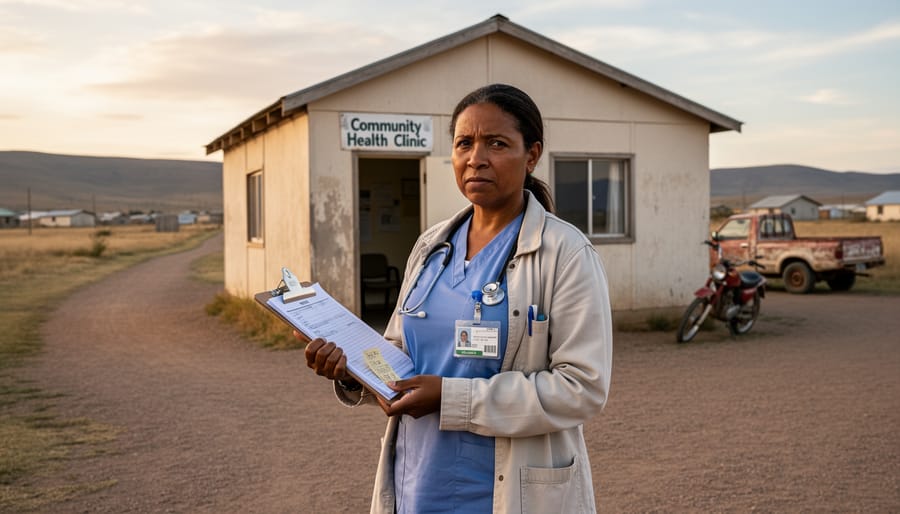
Remote and isolated community nursing positions offer some of the most rewarding opportunities in Canadian healthcare, combining competitive compensation with unique cultural experiences. These roles, often in Indigenous communities across northern regions and rural areas, come with premium hourly rates reaching $40.92 for federal positions, significantly above typical RN wages, plus comprehensive benefit packages that address the challenges of remote living.
What sets these positions apart isn’t just the pay. Housing allowances or provided accommodation, travel benefits for regular trips home, and professional development funding are standard. You’ll work with diverse populations, building cultural competency that enriches your entire career. The pace differs from urban hospitals: you’re often the primary healthcare provider, making autonomous decisions and managing everything from chronic disease to emergency stabilization before air transport.
Federal departments like Indigenous Services Canada actively recruit for these roles across provinces, particularly in communities where healthcare access remains limited. The work demands flexibility and resourcefulness, but nurses who thrive in remote settings consistently describe it as the most meaningful chapter of their careers, where clinical skills, cultural humility, and genuine human connection intersect daily.
3. Clinical Nurse Specialist, Advanced Practice Expertise
Clinical Nurse Specialists represent one of nursing’s most intellectually demanding and well-compensated advanced practice roles. These registered nurses hold master’s-level education in specific clinical areas and function as expert consultants within healthcare organizations. CNS positions typically command salaries in the $80,000 to $100,000+ range across Canada, with the upper end often exceeding this bracket in major urban centers and specialized facilities.
The role centers on three core functions: direct patient care in complex cases, staff education and mentorship, and evidence-based practice development. A CNS might specialize in areas like oncology, critical care, pediatrics, mental health, or wound care. Unlike nurse practitioners who focus primarily on direct clinical care, CNS professionals spend significant time shaping organizational policies, conducting research, and elevating practice standards across entire departments or hospital systems.
What makes this role particularly attractive is the blend of clinical engagement and strategic influence. You’re not just treating patients, you’re fundamentally improving how care is delivered. Many CNS positions offer regular weekday hours without shift work, making the role appealing for experienced nurses seeking intellectual challenge and better work-life balance alongside competitive compensation.
2. Practice Advisor/Nurse Educator, Shaping the Profession
Practice advisors and nurse educators occupy a unique position at the intersection of clinical expertise and professional leadership, earning competitive salaries while shaping how nursing is practiced across Canada. These roles command compensation in the $80,000 to $100,000+ range, with federal positions offering up to $136,540 annually depending on scope and responsibility.
Unlike bedside nursing, practice advisors work within healthcare organizations, professional associations, or government departments to develop clinical guidelines, quality standards, and educational programs that influence thousands of nurses. They review emerging evidence, interpret policy, and bridge the gap between research and frontline practice. Nurse educators, whether in academic institutions or clinical settings, prepare the next generation of nurses and provide continuing education to experienced practitioners.
Federal departments like Indigenous Services Canada actively recruit practice advisors to support nursing teams serving diverse populations, while provincial health authorities employ educators to maintain standards across hospital networks. The role appeals to experienced nurses seeking intellectual challenge and broader impact without leaving the profession entirely. You shape practice through mentorship and systems-level thinking rather than direct patient care, making this a natural career progression for nurses drawn to teaching, policy, and professional development.
1. Nurse Practitioner, Top of the Salary Scale

Nurse Practitioner positions command the highest compensation in Canadian nursing, with federal roles reaching $136,540 annually. NPs operate at the pinnacle of nursing practice, wielding expanded scope of practice that includes autonomous patient assessment, diagnosis, and prescribing authority. This level of responsibility and specialized education translates directly into premium pay.
The job market for nurse practitioners remains robust across Ontario, Alberta, and British Columbia, with opportunities in both urban centers and underserved communities. Federal departments actively recruit NPs for positions in Indigenous health services, correctional facilities, and National Defence, often offering comprehensive benefit packages alongside competitive salaries. The combination of clinical autonomy, diagnostic responsibility, and prescriptive authority makes these roles intellectually demanding and financially rewarding, representing the profession’s highest earning tier for those willing to pursue advanced education and certification.
Provincial Salary Variations: What to Expect Across Canada
Nursing salaries vary significantly across Canada’s provinces, shaped by a combination of local demand, cost of living, and how each provincial health system funds and organizes its workforce. While the national average provides a baseline, nurses in certain provinces consistently command higher compensation due to competitive labour markets and regional healthcare priorities.
Ontario stands out with Toronto RNs earning an average of $89,273 annually, 119% above the national average, reflecting both the city’s elevated cost of living and the concentration of specialized healthcare facilities. The province’s large urban centres drive demand across all nursing specialties, from emergency departments to community health programs. Alberta has historically offered competitive wages to attract and retain nurses amid its resource-driven economy, though compensation packages often include shift differentials and northern allowances that boost take-home pay beyond base salaries. British Columbia’s nursing market balances high urban salaries in Vancouver with premium compensation for positions in northern and remote communities, where isolation bonuses and housing support supplement hourly rates.
- Ontario offers the highest urban premiums but also faces the steepest housing costs in cities like Toronto
- Alberta provides strong base wages plus shift premiums and relocation incentives for rural positions
- B.C. compensates for geographic challenges with northern allowances and housing subsidies
- Federal positions across all provinces can reach $136,540 for nurse practitioners, with consistent pay bands regardless of location
Provincial collective agreements and wage grids further complicate the picture. Each province negotiates its own contracts with nursing unions, resulting in different step progressions, premium structures, and benefit packages. A nurse with five years’ experience might find their salary differs by $15,000 between provinces for the same role, making relocation a strategic career move for many seeking both higher compensation and lifestyle preferences.
Navigating Your Nursing Career Path
Moving up the salary ladder in nursing requires intentional steps, not just years of service. If you’re starting out and wondering how to become a nurse focus on programs that offer clear paths to advanced credentials. Once registered, target specialty certifications in areas like emergency, critical care, or mental health, employers value these and often tie them to higher pay bands. Many nurses who’ve climbed from staff RN to nurse practitioner or clinical specialist did so by stacking credentials over five to seven years while working full-time.
Location matters as much as credentials. Remote positions and high-demand provinces like Alberta and Ontario consistently offer premium wages, while urban centres like Toronto pay more to offset cost of living. Browse platforms like Nursing Careers Canada, which currently lists over 3,000 active positions with salary filters up to $100,000+, to compare what’s available across regions. Apply strategically to federal departments, Indigenous Services Canada and National Defence often post roles with comprehensive benefits and top-tier compensation.
Networking accelerates career progression. Connect with Canadian Frontline Nurses for mentorship, job leads, and insights from peers who’ve navigated similar paths. One emergency department nurse in Calgary shared that joining professional groups opened doors to a practice advisor role paying $115,000, a jump she credits to relationships built through these networks. Equally important: learn to avoid burnout as you climb, because sustainable career growth depends on protecting your well-being alongside chasing higher salaries.
Frequently Asked Questions
The path to higher nursing compensation in Canada raises practical questions for professionals planning their careers. Here’s what nurses commonly ask about salaries and opportunities across the country.
What is the average RN salary in Canada?
Registered Nurse salaries vary significantly by location, with Toronto offering an average of $89,273 annually or $43 per hour, which is 119% higher than the national average. Most RNs across Canada earn between $60,000 and $90,000 depending on experience, specialty, and province.
How much do nurse practitioners earn?
Nurse practitioners represent the highest-earning nursing role in Canada, with federal positions offering up to $136,540 annually. Provincial NP salaries typically range from $90,000 to $120,000, reflecting their advanced practice authority and autonomous patient care responsibilities.
Are remote nursing jobs higher paid?
Yes, remote and isolated community positions often command premium compensation, with federal postings offering up to $40.92 per hour plus additional benefits like housing support and travel allowances to offset the challenges of working in these locations.
What benefits come with federal nursing positions?
Federal nursing roles through departments like Indigenous Services Canada and Correctional Service Canada typically include comprehensive pension plans, extended health coverage, job security, and structured salary progression alongside competitive base pay.
How do I find nursing jobs with salaries over $100,000?
Platforms like Nursing Careers Canada list thousands of positions with salary filters including the $100,000+ range, making it easy to target advanced practice roles, nurse practitioner positions, and specialized federal opportunities that meet this threshold.
Geographic location dramatically impacts compensation potential. Nurses in major urban centres like Toronto can expect substantially higher wages than the national baseline, though cost of living considerations factor into the actual purchasing power of these salaries. Positions across Ontario, Alberta, and British Columbia dominate the higher-paying opportunities, with specialized roles and federal government departments offering the most competitive packages overall.
Canadian nursing in 2026 stands as a profession offering not just competitive compensation, but meaningful work that touches lives across this vast country. From practical nurses earning their first paychecks in long-term care to nurse practitioners commanding six-figure salaries in federal positions, the spectrum of opportunities reflects both the profession’s complexity and its recognition within our healthcare system.
The salary data we’ve explored reveals a simple truth: nurses are valued differently across provinces, settings, and specializations, yet opportunity exists everywhere. Whether you’re drawn to the urban intensity of Toronto emergency departments, the cultural richness of remote community practice, or the autonomy of advanced practice roles, there’s a path that aligns with your strengths and lifestyle priorities. The profession’s stability, coupled with ongoing demand across all regions, means your skills will remain essential regardless of economic shifts.
As you chart your course, remember that compensation is just one measure of a role’s worth. Connect with Canadian Frontline Nurses for community support, mentorship, and resources that go beyond salary guides. Your expertise, compassion, and commitment make you indispensable to Canadian healthcare, and that value deserves both recognition and reward.